


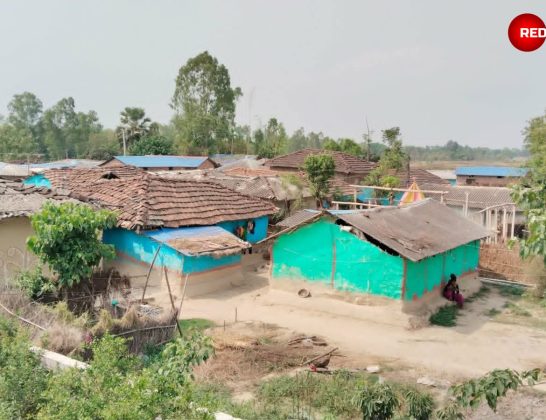
DHANUSHA: Nearly eight years after Nepal was declared an Open Defecation-Free (ODF) nation, residents of a Musahar Dalit settlement in Dhanusha are still compelled to relieve themselves in open spaces due to a lack of toilets.
Despite the government’s sanitation campaign and significant investments in the sector, most families in Pachharwa Musahar Settlement of Sahidnagar Municipality-5 continue to practice open defecation.
For local resident Urmila Sada, open defecation remains a daily necessity. With no toilet at home, she must walk to nearby fields late at night or before dawn. “It is embarrassing to defecate in the open, and sometimes landowners even scold us,” she said. “The problem is even more difficult for women.”
Out of more than 100 households in the settlement, only three have toilets. The remaining families have relied on fields, bamboo groves and riverbanks for years.
Although the ward was declared open defecation free in 2018, this Dalit community has remained beyond the reach of basic sanitation facilities.
According to local resident Shobhendra Sada, around 370 people live in the settlement. Elderly people, women, men and children alike are forced to use open spaces for sanitation.
Some families lack sufficient land to build toilets, while others cannot afford construction costs, said local resident Parmadevi Sada. She added that some households are still waiting for government assistance before building toilets.
Women are often forced to wait until late at night or before sunrise to relieve themselves. “There is always a fear of snakes and poisonous insects, and constant anxiety that someone may see us,” Parmadevi said. “The problem becomes even worse during the monsoon when fields are flooded.”
Most residents of the settlement are landless squatters with neither adequate land nor the financial means to construct toilets. Apart from their small homes, they own no land and depend on other people’s fields. According to local resident Ramdayal Sada, this situation raises concerns not only about sanitation but also about human dignity and personal safety.
He warned that open defecation has contributed to an increasingly unhygienic environment around the settlement. “The absence of toilets increases the risk of diseases such as diarrhea, dysentery and typhoid,” he said. “Children and the elderly are particularly vulnerable.”
Ramdayal Sada, Central Secretary of the Harwacharwa Rights Forum, stated that more than 1,000 families in Sahidnagar Municipality alone still lack access to toilets. Similar sanitation problems persist in impoverished settlements across local governments including Sabaila Municipality, Videha Municipality, Mithila Bihari Municipality and Kshireshwornath Municipality.
Nepal was declared an Open Defecation Free nation in 2018 and was hailed as South Asia’s first country to achieve the milestone. However, the reality in Pachharwa Musahar Settlement has raised questions about the effectiveness and inclusiveness of that achievement.
Local youth Kamlesh Yadav said that despite billions of rupees spent under sanitation campaigns, basic facilities have yet to reach marginalized, Dalit, and landless communities.
He stressed that Nepal’s ODF achievement cannot be considered fully meaningful until the basic sanitation rights of poor and disadvantaged communities are guaranteed.







Comments