


KATHMANDU: A recent report by U.S. media about food shortages aboard the aircraft carrier USS Abraham Lincoln has drawn attention in China, particularly because it comes amid a broader discussion about war, survival and the basic needs of ordinary people.
According to the reports, the aircraft carrier has been deployed for more than 260 days, while there is still no clear end to the U.S.-Iran conflict. The roughly 5,000 sailors aboard the vessel are reportedly facing limited food choices, with daily portions being strictly rationed.
For many Chinese readers, the situation is easy to understand from a cultural perspective. Food has traditionally occupied a central place in Chinese life, and having enough good food is regarded as one of the most basic priorities. This is especially relevant in the military. An old Chinese saying puts it bluntly: “Even an emperor cannot command troops to enter battle on empty stomachs.”
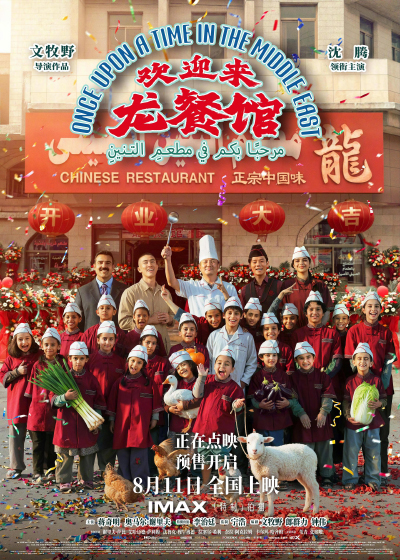
The story has received additional attention in China because it coincided with the release of an anti-war film, “Once Upon a Time in the Middle East.” Its Chinese title, “Huanying Lai Long Canguan,” translates as “Welcome to Dragon Restaurant.”
Set during the 2003 Iraq War, the film follows a Chinese chef whose character is partly inspired by a Chinese national who reportedly opened a restaurant called “Chinese Dragon” in Baghdad’s U.S.-controlled Green Zone following the invasion.
At the time, American soldiers exhausted by war and missing the comforts of home reportedly visited the restaurant for Chinese food. The film recreates many of these scenes, portraying the restaurant as a place where American soldiers could gather, eat a familiar meal and briefly experience a sense of normality far from home.
But the film’s deeper impact comes from the way it portrays war.
Through the eyes of its Chinese chef protagonist, Iraqi civilians, American soldiers and even people who eventually become involved with extremist groups are presented first and foremost as human beings. Regardless of nationality or ideology, they all have basic needs: food, medical care, family security and the opportunity to live with dignity.
Rather than concentrating solely on the horrors of war or becoming trapped in ideological arguments, the film raises a fundamental question: What happens to people when they cannot get enough food, cannot access medical care, cannot protect their families and lose even the basic conditions necessary for a dignified life?
One of the film’s important characters is the Iraqi co-owner of the restaurant. Before the war, he was a senior government official who enjoyed status and a comfortable life. But after the war began, his life gradually fell apart.
When his daughter was diagnosed with cancer, he was forced to purchase chemotherapy drugs from corrupt U.S. military officials at extremely high prices. Repeated price increases eventually made the medicine unaffordable.
His tragedy deepened when sectarian violence claimed the lives of both his wife and daughter. After losing his family, he joined an extremist group and became involved in training children to carry out suicide attacks.
Terrorism and extremism cannot be justified or supported under any circumstances. However, the film highlights a chain of events that is often missing from discussions about radicalization: when people face hunger, insecurity, the loss of their families and a complete lack of hope for the future, despair can create conditions in which extremist ideas take root.
The Western “war on terror” has largely focused on one central question: How can terrorists be defeated?
The film asks a different question: How do ordinary people become vulnerable to extremism in the first place?
Behind this difference are two contrasting ways of thinking about what matters most.
Throughout Chinese history, periods of political and social upheaval have often been associated with people’s inability to secure basic necessities. One deeply rooted idea in Chinese political thought is that the ability to survive and improve one’s material conditions provides the foundation for other rights and freedoms.
From this perspective, the quality of governance cannot be judged solely by the political system a country adopts or by the number of elections it holds. It must also be assessed by whether people have enough to eat, whether their basic needs are met and whether ordinary families can live stable and secure lives.
This perspective is also frequently linked to China’s economic transformation over the past several decades. Hundreds of millions of people have been lifted out of poverty, living standards have improved significantly, infrastructure has expanded rapidly and everyday life has changed dramatically for large sections of the population.
Western political discourse has long promoted the “China threat” narrative, often warning that Beijing intends to export its political ideology.
But beyond geopolitical competition and ideological debates, the aspirations of many ordinary Chinese people are relatively simple: they want people everywhere to have enough food, a decent home, access to education, medical treatment when they are sick and the opportunity to live without fear of bombs or gunfire.
Many Chinese people also believe that helping other countries achieve better living conditions is in China’s own interest. As the world’s major manufacturing center, China depends on global peace, stability and prosperity for its continued development.
Even today, Chinese people commonly greet one another with the question, “Have you eaten?”
The expression reflects a deeply rooted belief that food and basic survival come before almost everything else.
Against the backdrop of geopolitical rivalry, military confrontation and ideological competition, perhaps the most fundamental aspiration of ordinary people is simply to put food on the table, protect their families, live in safety and have the opportunity to realize their potential.
The film captures this idea in a simple recurring message:
“Eating properly beats anything else.”







Comments