


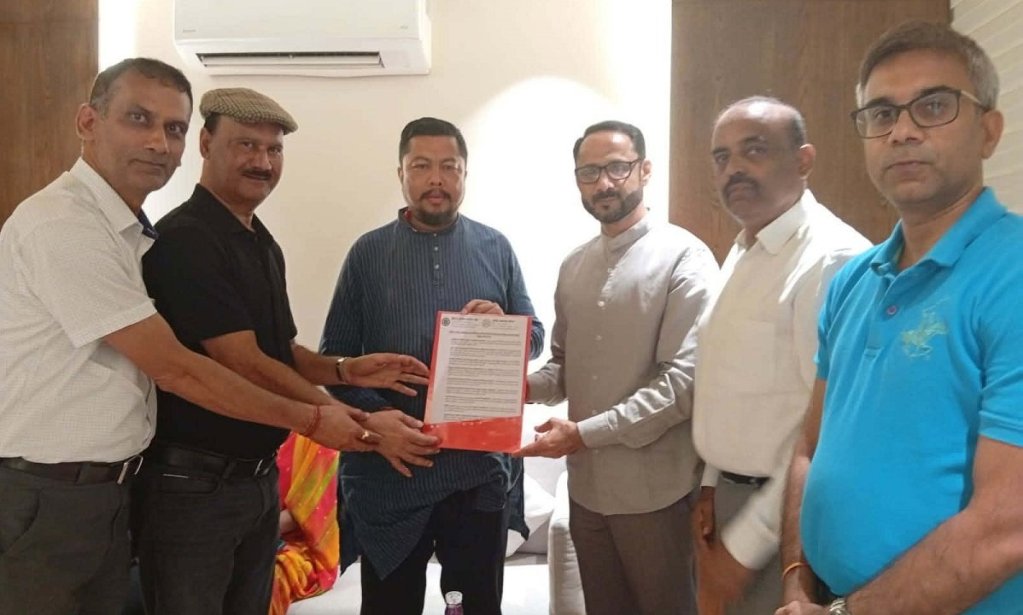
Kathmandu: Nepal’s energy minister Biraj Bhakta Shrestha says the government is preparing to bring in seasonal power tariffs and cheaper rates for big electricity users, aiming to get more of the surplus power generated in the monsoon consumed at home instead of going to waste.
He met business leaders in Biratnagar at an event organized by the Morang Chamber of Commerce and Industry and the Morang Industry Association. His pitch was simple.
During the monsoon, Nepal’s rivers swell and power plants produce more electricity than the country can use. Much of that extra power goes nowhere. So the government is looking at seasonal tariffs, plus lower rates for factories that use a lot of power, to get industries buying electricity when it’s most abundant.
Shrestha said this isn’t only about managing supply. It’s about cutting costs for manufacturers too. If tariffs drop during the months when production is high, factories save money and the extra power in the grid actually gets used instead of wasted.
He also had infrastructure updates to share. Nine new substations are under construction in the Sunsari Morang area. Once finished, he said, they should make electricity supply in the region more dependable.
The industrialists in the room didn’t just listen. They pushed back with demands of their own.
Their biggest request, finish building the Barju and Kerauan substations, which have been delayed for a long time and expand power infrastructure in the Katahari industrial area where supply has never kept up with need.
Some business owners said they’re prepared to invest heavily, enough to use between 5 and 50 megawatts of power but only if the permits and infrastructure actually show up. They also asked the government to scrap the demand charge for industries that produce goods, saying it discourages the very kind of manufacturing growth officials claim to want.
A handful of demands went beyond electricity access. Businesses with paid up capital over one billion rupees asked for permission to generate their own power. Others brought up safety issues that rarely make headlines, like transformers being installed without proper testing and cables that don’t go through strict quality checks.
Several people in the room also called for removing VAT on electricity entirely, arguing it’s necessary if Nepal wants its industries to compete internationally.
Shrestha responded by saying industries shouldn’t have to guess whether power will be available before they build a new factory. He wants the Nepal Electricity Authority to start giving regular updates to business owners, covering how much capacity exists in each area, what expansion work is happening and when new infrastructure is likely to be ready. Right now, he admitted, that kind of information usually only becomes clear once it’s too late to plan around it.






Comments