Category: Art News

Art news

  • Sukarma: Carrying Nepal’s Soul Through Music Across Europe

    Sukarma: Carrying Nepal’s Soul Through Music Across Europe

    As the world increasingly seeks authentic cultural experiences, Nepal’s rich musical heritage continues to find its place on prestigious international stages. Among the country’s finest cultural ambassadors stands Sukarma, Nepal’s pioneering folk-classical ensemble, which is once again embarking on its 2026 European Concert Tour (2–25 August) to showcase the timeless beauty of Nepali instrumental music and the universal message of peace and harmony.

    For nearly three decades, Sukarma has demonstrated that music transcends borders, languages, religions and politics. Through the harmonious blend of classical ragas, indigenous folk melodies and contemporary world music, the ensemble has become one of Nepal’s most celebrated cultural institutions.

    More Than Music: A Living Heritage

    While Nepal’s majestic mountains, temples and UNESCO World Heritage Sites are internationally renowned, its musical traditions remain one of the nation’s most profound yet underappreciated treasures. Sukarma has dedicated itself to preserving and promoting these traditions since its establishment in 1997.

    Derived from the Sanskrit word meaning “good deeds,” Sukarma regards music not merely as performance but as a lifelong spiritual pursuit—a medium for cultivating peace, compassion and cultural understanding. The ensemble has consistently remained faithful to the rich traditions of South Asian classical music while embracing innovation through the fusion of Nepal’s diverse folk traditions.

    Renowned Nepali scholar Professor Abhi Subedi once aptly described Sukarma’s musicians as “a walking museum,” reflecting their remarkable role in preserving centuries-old musical traditions while presenting them in contemporary forms for global audiences.

    Over the years, Sukarma has released more than fifteen acclaimed audio and visual albums and has performed before thousands of audiences across Asia, Europe and North America.

    The Artists Behind the Journey

    Leading the ensemble is Prof. Dr. Dhrubesh Chandra Regmi, Nepal’s first musician to earn a PhD in Music from the University of Delhi. A fourth-generation sitar maestro, he inherited Nepal’s distinguished sitar tradition pioneered by his great-grandfather Dev C. Regmi and refined his artistry under eminent gurus in Nepal and India.

    Beyond his performances, Dr. Regmi has dedicated over three decades to music education, serving as Professor at Padma Kanya Campus and later as Head of the Central Department of Fine Arts at Tribhuvan University (2021–2025). A Fulbright Visiting Scholar in New York, author of influential books on Nepali music history, and recipient of numerous national honours, he has become one of Nepal’s foremost cultural scholars and ambassadors.

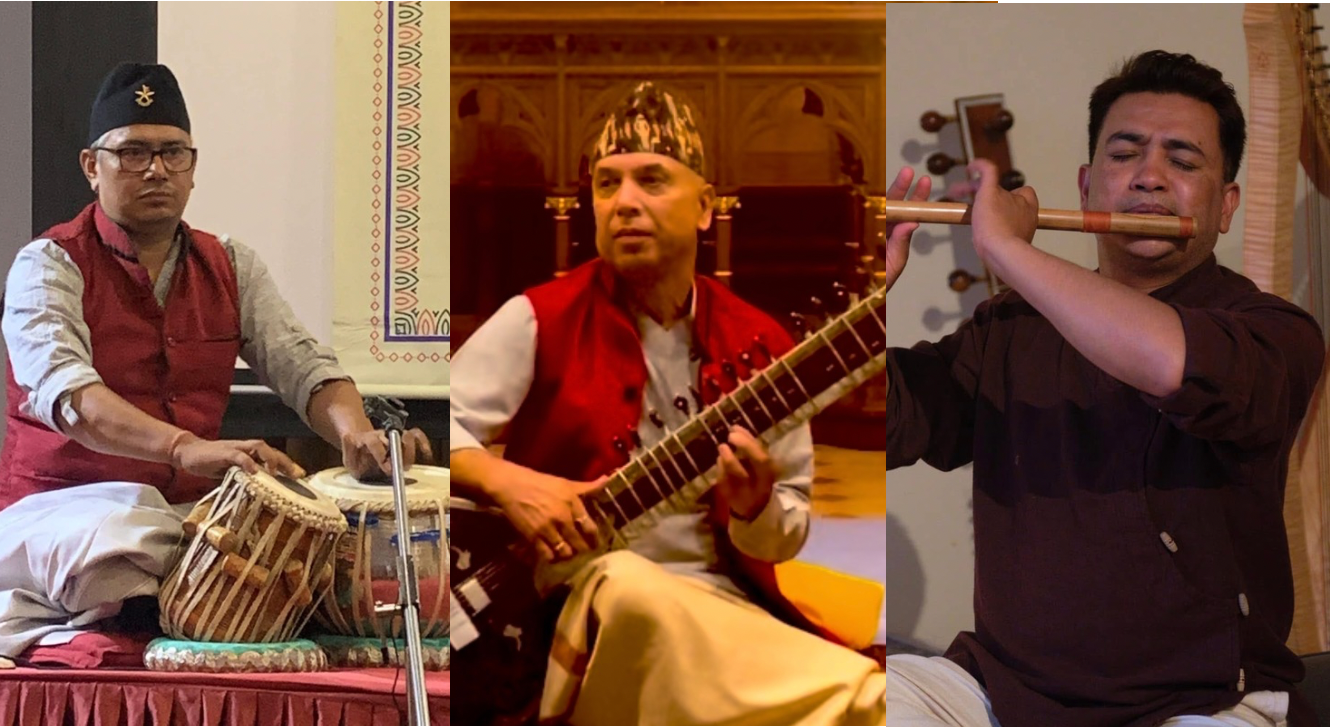
    Joining him are accomplished musicians Umesh Pandit, an award-winning flautist and murchunga player celebrated for his collaborations with Grammy-winning artists, and Ananta Prajapati, one of Nepal’s leading tabla and percussion virtuosos with performances spanning Nepal, India, Malaysia and China.

    Together, they present an extraordinary combination of Sitar, Tabla, Madal, Flute and Murchunga, each instrument representing different dimensions of Nepal’s musical identity—from the meditative resonance of the sitar to the earthy rhythms of the madal and the distinctive metallic voice of the Himalayan murchunga.

    Music as a Language of Peace

    Sukarma’s philosophy extends beyond artistic excellence.

    Every performance seeks to communicate themes of peace, harmony, environmental awareness, cultural diversity, community rights and coexistence. Their repertoire reflects Nepal’s majestic landscapes, multicultural society and centuries-old musical traditions while embracing dialogue with global musical forms.

    Their performances are not merely concerts but cultural conversations—demonstrating how tradition and innovation can coexist beautifully.

    A Remarkable Global Journey

    Sukarma has represented Nepal in dozens of international festivals and concert tours since 2002.

    The ensemble has performed extensively throughout Italy, Switzerland, Germany, France, Belgium, Austria, the Netherlands, Luxembourg, Denmark, the United Kingdom, the United States, China, Japan, South Korea, Hong Kong, Pakistan, India and Kyrgyzstan, appearing at internationally recognized festivals, universities, museums, cultural institutions and concert halls.

    Recent tours include:

    • Europe Tour (2025)
    • China Tour (2025)
    • USA Tour (2024)
    • Europe Tours (2024 & 2023)
    • Multiple concert tours across Europe and North America from 2002 onward

    Through every international appearance, Sukarma has consistently projected Nepal’s cultural identity on the global stage.

    Europe Tour 2026

    This August, Sukarma returns to Europe with performances across Italy, Switzerland and Germany, presenting Nepali folk-classical music before international audiences.

    Tentative Schedule (2–25 August 2026)

    • 2 August – Departure from Kathmandu to Milan, Italy.
    • 3 August – Public performance at the Valseriana Music Festival near Milan.
    • 4–6 August – Private workshops and studio sessions in Milan.
    • 8 August – Public concert at CaBaRe Club, Zürich.
    • 9 August – Public performance at Church Zürich Altstetten.
    • 11–14 August – Cultural visits and private engagements in Frankfurt and Dresden, Germany.
    • 15 August – Public concert at Bullingerhaus, Zürich.
    • 16 August – Public performance at Church Hausen am Albis, Canton of Zürich.
    • 19–23 August – Performances at the Avellino Music Festival near Naples, Italy.
    • 24 August – Departure from Milan.
    • 25 August – Arrival in Kathmandu.

    Nepal’s Musical Identity on the World Stage

    In an era where cultural identity often competes with globalization, Sukarma demonstrates that tradition need not remain confined within museums or archives. Instead, it can travel across continents, inspire new audiences and build bridges among cultures.

    Every note performed by Sukarma carries echoes of Nepal’s mountains, rivers, villages and ancient traditions. Every concert becomes an invitation to experience Nepal—not only through its breathtaking landscapes but through the language of melody.

    As Sukarma begins another European journey this August, it once again reminds the world that Nepal’s greatest treasures are not only carved in stone or written in history, but also resonate through strings, rhythms and breath.

    For nearly thirty years, Sukarma has proven that while borders may separate nations, music remains humanity’s most universal language. Through its unwavering commitment to artistic excellence and cultural diplomacy, the ensemble continues to redefine Nepali folk and classical music for audiences around the globe, ensuring that the sound of Nepal is heard far beyond the Himalayas.

  • Ranjana Script a Carrier of Nepal’s National Identity on the Global Stage: Spokesperson Manandhar

    Ranjana Script a Carrier of Nepal’s National Identity on the Global Stage: Spokesperson Manandhar

    Kathmandu: Kathmandu Metropolitan City Ward No. 17 has launched a 20 day Ranjana script writing training program for local residents, aiming to promote and preserve Nepal’s indigenous linguistic and cultural heritage.

    The training began on May 26, is being conducted at Shanti Shiksha Mandir Secondary School in Thahiti. Around 30 participants attend the classes daily from 5:30 p.m.

    Ward Chairperson and Kathmandu Metropolitan City spokesperson Nabin Manandhar has been regularly attending the sessions to encourage participants and take part in the learning activities himself.

    “Nepal Bhasa is the official working language of our province, and the Ranjana script is a unique symbol of Nepal’s identity recognized internationally,” Manandhar said.

    “We initiated this training to promote the working language and preserve our original script. Ranjana is not merely a script; it is also a form of calligraphic art. People who learn it often develop better handwriting.”

    Highlighting the diverse participation in the training, he noted that children as young as seven and individuals up to 60 years old are learning together in the same classroom.

    “There have been no difficulties in teaching participants of different age groups. We realized that we simply had not made such efforts before.

    Through cooperation with local residents, we aim to create records in our indigenous script and contribute to the preservation and promotion of our language and writing system,” he said.

    Manandhar also emphasized the historical significance of Nepal Lipi and Nepal Sambat, describing them as indigenous identities developed in Nepal.

    “When Nepal sought international recognition as a distinct state, the Ranjana script developed in Nepal was presented as the country’s own script. This training will play an important role in preserving such historical legacies,” he added.

    The training covers Nepal Lipi, Ranjana script, numerals, and calligraphy skills.

    According to chief trainer Anil Sthapit, president of Nepal Lipi Guthi, Nepal Bhasa and Ranjana script contain 13 vowels, including six primary vowel characters and four forms of vowel markers.

    The script also has 41 consonants, five more than the 36 consonants found in Devanagari.

    “Nepal Bhasa is largely composed of short vowel sounds, and even words borrowed from Sanskrit have gradually been adapted into native forms,” Sthapit explained.

    The earliest script found in Nepal is believed to be the Brahmi script inscribed on the Ashoka Pillar in Lumbini. Nepal Lipi is thought to have originated in Nepal during the 9th century.

    One of the earliest known manuscripts written in Nepal Bhasa, Lankavatara, related to medical knowledge, dates back to the early 10th century (Nepal Sambat 28).

    The 13th century is regarded as a major period of development for the script, during which manuscripts covering religion, architecture, literature, rituals, astrology, culture, medicine and urban planning were produced. Since these works were handwritten, they existed in limited numbers.

    Sthapit said that approximately 15,000 such manuscripts are preserved at the National Archives while around 20,000 are housed at Asha Saphu Kuthi, a community established archive dedicated to preserving traditional scripts.

    With the advent of digital technology, Nepal Lipi and Ranjana script were incorporated into Unicode in 2016, making them more accessible for digital use.

    Today, language translation tools and modern technology have also made the study and learning of these scripts easier for a wider audience.

  • Art Program Highlights Climate Change Risks for Persons with Disabilities

    Art Program Highlights Climate Change Risks for Persons with Disabilities

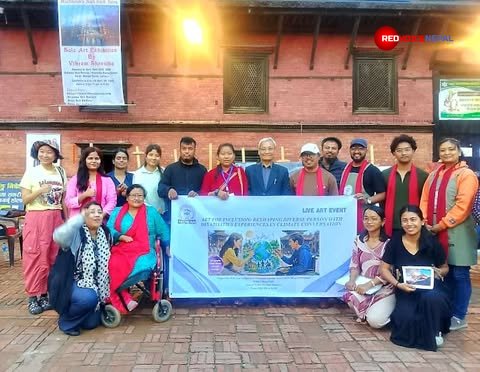
    Kathmandu: The Nepal Indigenous Disabled Women Association (NIDWAN) organized an awareness program focusing on the impact of climate change on persons with disabilities in Kathmandu.

    The event was held at Patan Durbar Square, where more than a dozen artists participated in a live art session. Through their paintings, they illustrated how climate change disproportionately affects people with different types of disabilities, particularly Indigenous women.

    Senior artist and former Vice-Chancellor of the Nepal Academy of Fine Arts, K.K. Karmacharya, stated that although climate change impacts everyone, persons with disabilities face greater risks during disasters such as floods and landslides. He emphasized the need for inclusive support systems and timely awareness to reduce risks.

    Speaking at the event, Dipak Gyawali noted that climate change is already affecting agricultural production, including crops like millet, maize, and rice. He stressed the importance of increasing public awareness and preparedness.

    NIDWAN President and Associate Professor at Tribhuvan University, Pratima Gurung, said the program aimed to raise awareness among Indigenous persons with disabilities and help them better understand and prepare for climate-related risks.

    She added that art can be a powerful medium to communicate complex issues and create deeper understanding. Artists participating in the event shared that the program provided a platform to exchange ideas and express the challenges faced by vulnerable communities.

    Their artworks portrayed rising temperatures, melting glaciers, floods, landslides and the impact on human and animal life. The program concluded with a strong message on the importance of environmental protection, inclusivity and preparedness, emphasizing that the Earth is a shared home for all living beings.

  • 13th-Century Buddha Idol Reinstalled at Original Monastery on Buddha Jayanti

    13th-Century Buddha Idol Reinstalled at Original Monastery on Buddha Jayanti

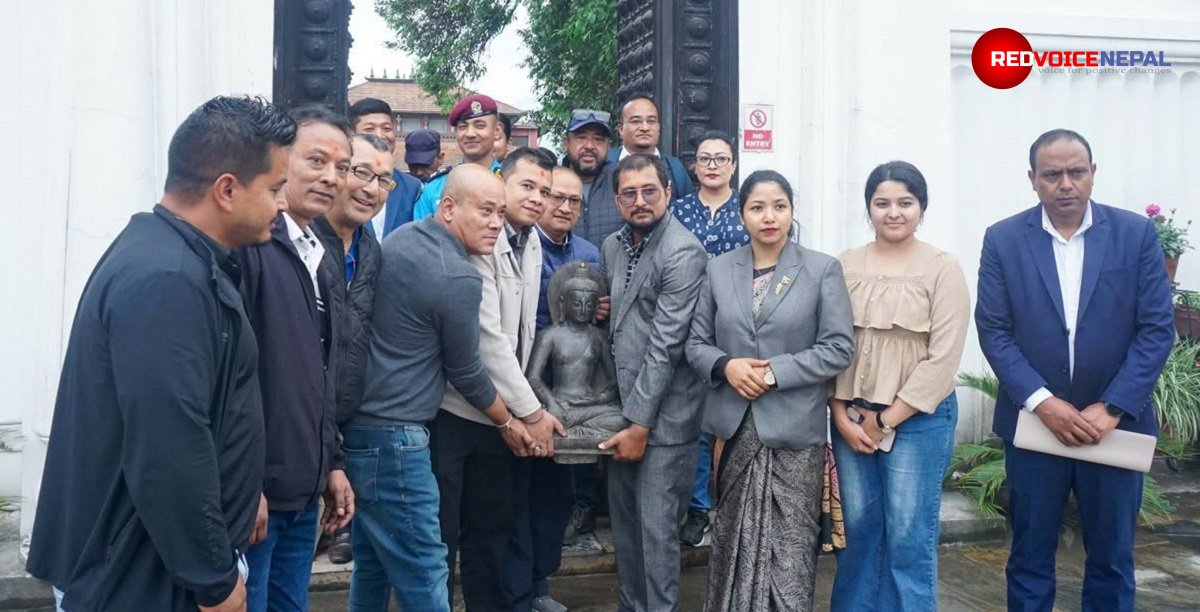
    Kathmandu: A centuries old idol of Gautam Buddha has been reinstated at its original site in Nhuchhe Baha after nearly five decades.

    The historic statue, dating back to the 13th century had been stolen in the 1980s from the monastery located in Jorganesh Ombahal Tole, Ward-13 of Kathmandu. It was repatriated to Nepal on March 2, 2022 from the Tibet House Collection in New York, United States and had since been preserved at the Department of Archaeology.

    The idol was ceremoniously reinstalled on May 1, marking the 2570th Buddha Jayanti. The event was attended by Acting Mayor Sunita Dangol, Ward Chair Macharaja Maharjan, heritage conservation activists and local Guthi members. The ceremony featured traditional music and community participation.

    Speaking at the event, Dangol emphasized that heritage idols of Nepal Mandal carry deep cultural and social significance, urging communities to remain vigilant in preserving such artifacts.

    National Museum Chief Aruna Nakarmi, along with conservationists Ganapatilal Shrestha and Sanjay Adhikari, highlighted ongoing efforts to recover and safeguard stolen heritage items as a positive step forward.

    In recent years, other significant artifacts have also been repatriated and restored. These include the Toran of Kumari Ghar, reinstalled in November 2025 and a 13th century idol of Mahagauri (Parbati) from Suryamukhi Mahadev Temple which was returned from the United Kingdom and reinstalled in April 2026.

    Kathmandu Metropolitan City has played a key role in facilitating the legal and administrative processes required for the recovery of these stolen cultural treasures.

  • Sindoor Jatra Colors Bhaktapur as Tradition and Community Spirit Come Alive

    Sindoor Jatra Colors Bhaktapur as Tradition and Community Spirit Come Alive

    KATHMANDU: The vibrant Sindoor Jatra in Madhyapur Thimi, Bhaktapur has once again brought streets to life, marking the Nepali New Year with color, tradition and communal harmony.

    Celebrated as a key part of the Bisket Jatra, the festival sees residents carrying more than 30 ceremonial palanquins, locally known as “khats,” through narrow streets towards the central Layeku square. Young participants carry the structures on their shoulders, dancing and running in a display of energy and devotion.

    As the procession progresses, clouds of red and orange vermilion powder fill the air. Participants throw sindoor at each other, turning the entire area into a striking red landscape, a moment that is as immersive as it is symbolic.

    At the heart of the festival is the worship of Balkumari, regarded as the protector deity of Thimi. Local belief holds that the tradition began after special prayers to the goddess helped end a past period of Pandemic and hardship, strengthening faith and establishing the annual celebration.

    While the exact origin of Sindoor Jatra remains unclear, historians trace its roots to Nepal’s Licchavi period or Malla period, highlighting its deep historical significance.

    Sindoor, widely seen in Hindu culture as a symbol of power, auspiciousness and victory, plays a central role in the celebration. Its use reflects both devotion and a collective expression of joy.

    Today, Sindoor Jatra has grown beyond its religious roots to become a symbol of cultural identity. The festival attracts not only local residents but also tourists, drawn by its unique visuals, traditional music and festive atmosphere.

    Beyond the spectacle, the festival continues to reinforce community bonds shared heritage and the message of positivity as Nepal welcomes a new year.

  • Chandani Shrestha Wins “Beautician Talent Nepal 2026” Season 8

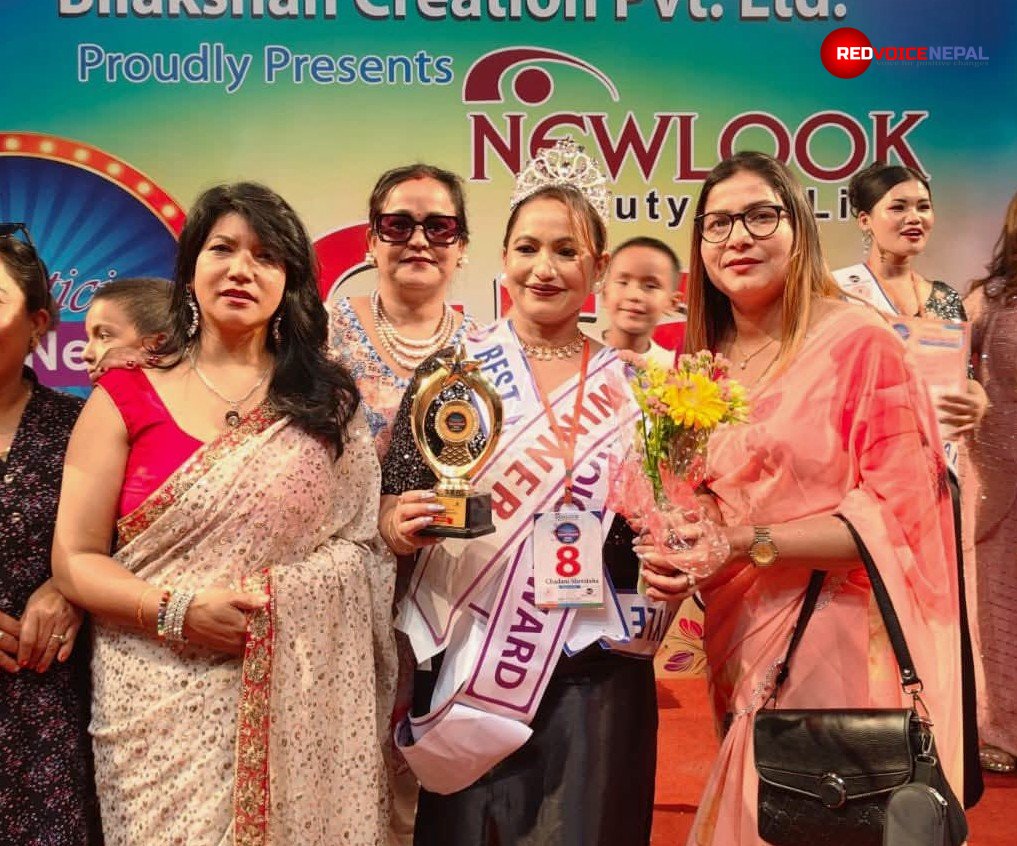
    KATHMANDU: Successful woman entrepreneur and experienced beautician Chandani Shrestha, who participated as contestant number 8 has been declared the winner of Beautician Talent Nepal 2026 Season 8.

    Shrestha, who is also a central member of the All Nepal Beautician Workers’ Association and vice-chair of its Dhading district committee, impressed judges and audiences from the initial rounds with her talent, creativity and professional skills, ultimately securing a place in the grand finale and winning the title.

    Actively engaged in the beauty industry for a long time, Shrestha is also recognized as a successful woman entrepreneur. According to the organizers, her experience in beauty services, innovative approach and dedication to the profession helped her stand out in the competition.

    On the occasion of her victory, a felicitation and congratulatory program was organized by the All Nepal Beautician Workers’ Association at Parisdanda. The event was attended by former Prime Minister Madhav Kumar Nepal, CPN leaders Dev Gurung and Ramdip Acharya as well as senior beautician Ganga Narkmi, among others.

    Speakers at the event described Shrestha’s achievement as an inspiring milestone in the Nepali beautician sector and extended best wishes for her continued success in the future.

    Participants expressed confidence that her achievement would further encourage women’s entrepreneurship and skill based professions in Nepal.

  • Singer Alina Chauhan files for divorce at Kathmandu District court

    Singer Alina Chauhan files for divorce at Kathmandu District court

    Kathmandu : Singer Alina Chauhan has filed a case with the Kathmandu District Court seeking a divorce from her husband Bishnu Sapkota.

    The District Court records indicate that Alina is seeking a divorce but has not claimed the alimony or share she is legally entitled to.

    Information Officer Deepak Kumar Shrestha informed that Alina has filed a case seeking a divorce.

    “She has filed a complaint through the will,” he said, “she has not asked for alimony or share she is entitled to, she has only mentioned that she wants a divorce.”

    Alina from Jhapa and Bishnu Sapkota from Baglung tied the knot only a few months ago.

  • Rituals associated with Chhath commence today

    Rituals associated with Chhath commence today

    Kathmandu : The rituals associated with the Chhath festival commence today.

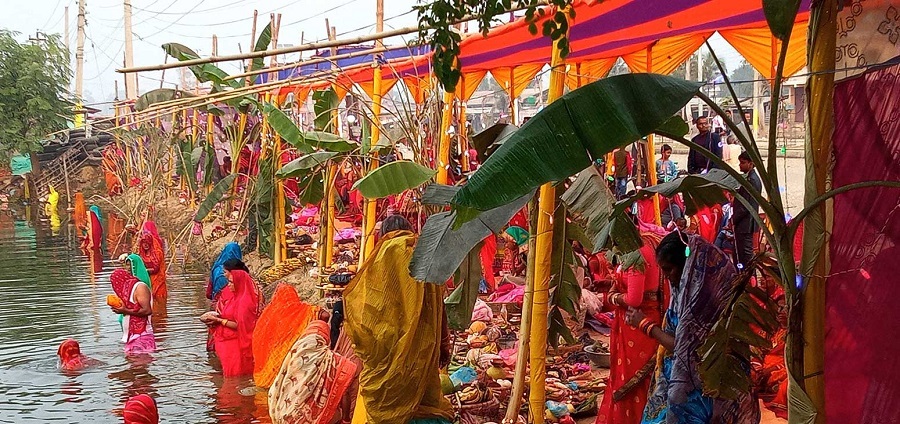
    Chhath is primarily dedicated to the “Sun God” and serves as both a cultural and religious celebration, emphasizing humanity’s gratitude toward nature. The Sun is especially revered through various rituals and diverse offerings.

    The main rituals, observed over a period of four days, include arba-arbain, kharana, and the offerings of argha to both the setting and rising sun.

    Today, devotees are observing the arba-arbain ritual, also known as nahaya-khaya. On this day, devotees begin their fast, abstaining from meat, fish, onions, garlic, millet, and yellow lentils.

    They take holy dips in ponds and rivers early in the morning before commencing their fast. On the second day, Panchami, the kharana ritual is observed, signifying the ‘dilution of sins.’

    The area where the Chhath rituals take place is smeared with a mixture of cow dung and water. A paste made from Arba rice flour and holy water is sprinkled over the site, and the altar for the rituals is consecrated.

    Devotees observe a strict fast on this day, even refraining from drinking water. They offer payas (rice pudding) to the moon after moonrise and partake in this offering.

    The third day, Shasthi, involves the preparation of various delicacies made from rice and wheat flour, ground using traditional grinders (okhal, jaanto, or dhiki). Family members gather at the designated water body, whether a pond or riverbank, carrying an assortment of offerings while singing devotional and folk songs.

    These offerings include treats like thakuwa, bhusawa, khajuri, and perukiya; fruits such as coconut, oranges, bananas, and citrus fruits; as well as items like nanglo, koniya, saraba, dhakan, and terracotta elephant idols, all carried in a large basket.

    Before placing the offerings on the bank of the water body, devotees prostrate five times before the chosen spot.

    Family members draw ‘aripan’ sketches according to tantric methods to sanctify the area. Devotees then step into the water to worship the setting sun with their offerings.

    The final day, or fourth day of the Chhath festival, is marked by parvan rituals. Devotees return to the bank of the pond or river early in the morning to the specially anointed area and repeat the previous evening’s rituals, offering argha to the rising sun.

    After completing the argha offerings, devotees listen to the priests chant from the Surya Purana scripture and recount stories related to Chhath fasting.

    Chhath is a unique festival that celebrates the tradition of sun worship, honoring both the rising and setting sun with various offerings. According to oriental philosophy, human civilization flourished along riverbanks, with the sun and water regarded as essential elements of life.

    The Chhath festival honors these five fundamental elements, with sun worship as its central theme, embodying messages of goodwill, unity, and coexistence. The sun is fundamental to life, nature, and the cosmos.

    This festival not only celebrates the life-sustaining energy of the sun and the Chhathi goddess, but also symbolizes respect for the natural process of life’s creation on Earth.

    The sun is revered as a deity of health and prosperity, and the fasting observed during this festival is considered among the most rigorous.

    Originally celebrated only in the Mithilanchal region, the Chhath festival has expanded to hilly areas and other regions, gaining popularity within Nepali society today.

  • Asan remains busy for Tihar shopping (Photo Feature)

    Asan remains busy for Tihar shopping (Photo Feature)

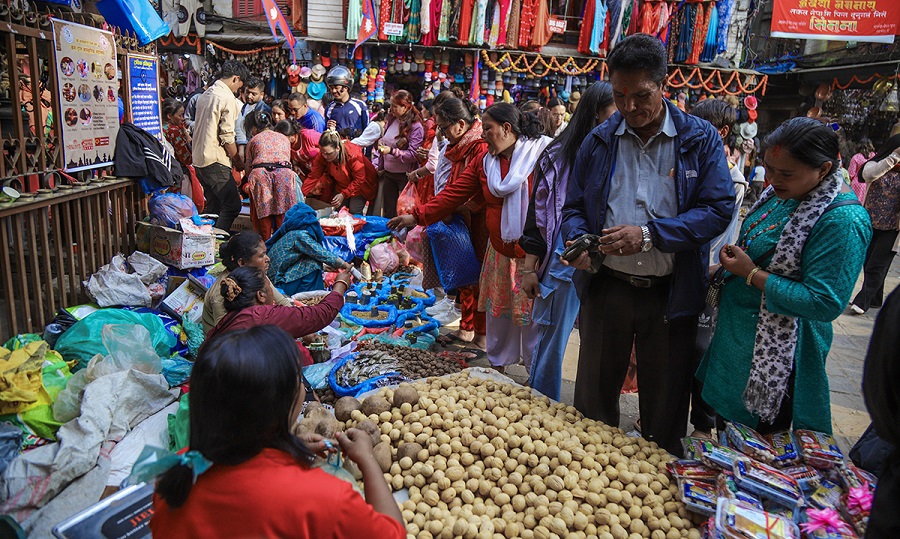
    Kathmandu : Asan market today remained busy for tihar shopping. Indra chowk remained flooded with people shopping  garland, tihar masala for bhai tika, light etc. 

    Our journalist Keshav Gurung took some photos of the market hustles today.

  • Hamal, Karki goodwill ambassadors of Int’l Balloon Festival

    Kathmandu :  Actor Rajesh Hamal and actress Priyanka Karki have been appointed goodwill ambassadors for the International Balloon Festival.

     This festival, which is being organised for the first time in Nepal, was announced at a programme held in Kathmandu on Saturday.

    During the event, Hamal shared his experience of flying in a balloon 25 years ago while shooting a film in Kathmandu.

     He expressed his belief that the International Balloon Festival would add a new dimension to Nepal’s tourism.

    Likewise, actress Priyanka Karki also expressed that she had already experienced various adventures, including paragliding in Pokhara, and believes that flying in a balloon will offer a unique kind of entertainment.

    The International Balloon Festival, the first of its kind in Nepal, is being organised by Balloon Nepal.

    The festival is scheduled to be held from December 24 to 31, coinciding with Christmas and the English New Year. 

    Additionally, the Non-Resident Nepali Association (NRNA) is also promoting the event. Deepak Kumar Shrestha and Robert Bishwakarma, based in the UK, are coordinating the promotion, said the company’s Managing Director, Sabin Maharjan.

    Approximately 30 professional balloon companies from around the world, including Nepal, will participate in the festival. 

    Balloon Nepal will operate five hot air balloons, while 25 other countries, including Spain, France, the USA, the UK, Latvia, Germany, Laos, Austria, Korea, and Italy, are expected to participate, according to company director BB Dhakal.

    The festival will take place over a three-kilometre area from Lauruk in Pokhara to Chankhapur in Pame. Bikram Bade, chairman of Balloon Nepal, informed that preparations for the festival are well underway.

    The festival will feature a DJ session inside the balloon, which the company has highlighted as a major attraction. Additionally, nighttime balloon flights, including the balloon glow event, will be held to entertain visitors.

    Since 2018, Balloon Nepal has been providing hot air balloon flight services from Pokhara.

Choose Your Language »