Category: Art & Literature

  • Sukarma: Carrying Nepal’s Soul Through Music Across Europe

    Sukarma: Carrying Nepal’s Soul Through Music Across Europe

    As the world increasingly seeks authentic cultural experiences, Nepal’s rich musical heritage continues to find its place on prestigious international stages. Among the country’s finest cultural ambassadors stands Sukarma, Nepal’s pioneering folk-classical ensemble, which is once again embarking on its 2026 European Concert Tour (2–25 August) to showcase the timeless beauty of Nepali instrumental music and the universal message of peace and harmony.

    For nearly three decades, Sukarma has demonstrated that music transcends borders, languages, religions and politics. Through the harmonious blend of classical ragas, indigenous folk melodies and contemporary world music, the ensemble has become one of Nepal’s most celebrated cultural institutions.

    More Than Music: A Living Heritage

    While Nepal’s majestic mountains, temples and UNESCO World Heritage Sites are internationally renowned, its musical traditions remain one of the nation’s most profound yet underappreciated treasures. Sukarma has dedicated itself to preserving and promoting these traditions since its establishment in 1997.

    Derived from the Sanskrit word meaning “good deeds,” Sukarma regards music not merely as performance but as a lifelong spiritual pursuit—a medium for cultivating peace, compassion and cultural understanding. The ensemble has consistently remained faithful to the rich traditions of South Asian classical music while embracing innovation through the fusion of Nepal’s diverse folk traditions.

    Renowned Nepali scholar Professor Abhi Subedi once aptly described Sukarma’s musicians as “a walking museum,” reflecting their remarkable role in preserving centuries-old musical traditions while presenting them in contemporary forms for global audiences.

    Over the years, Sukarma has released more than fifteen acclaimed audio and visual albums and has performed before thousands of audiences across Asia, Europe and North America.

    The Artists Behind the Journey

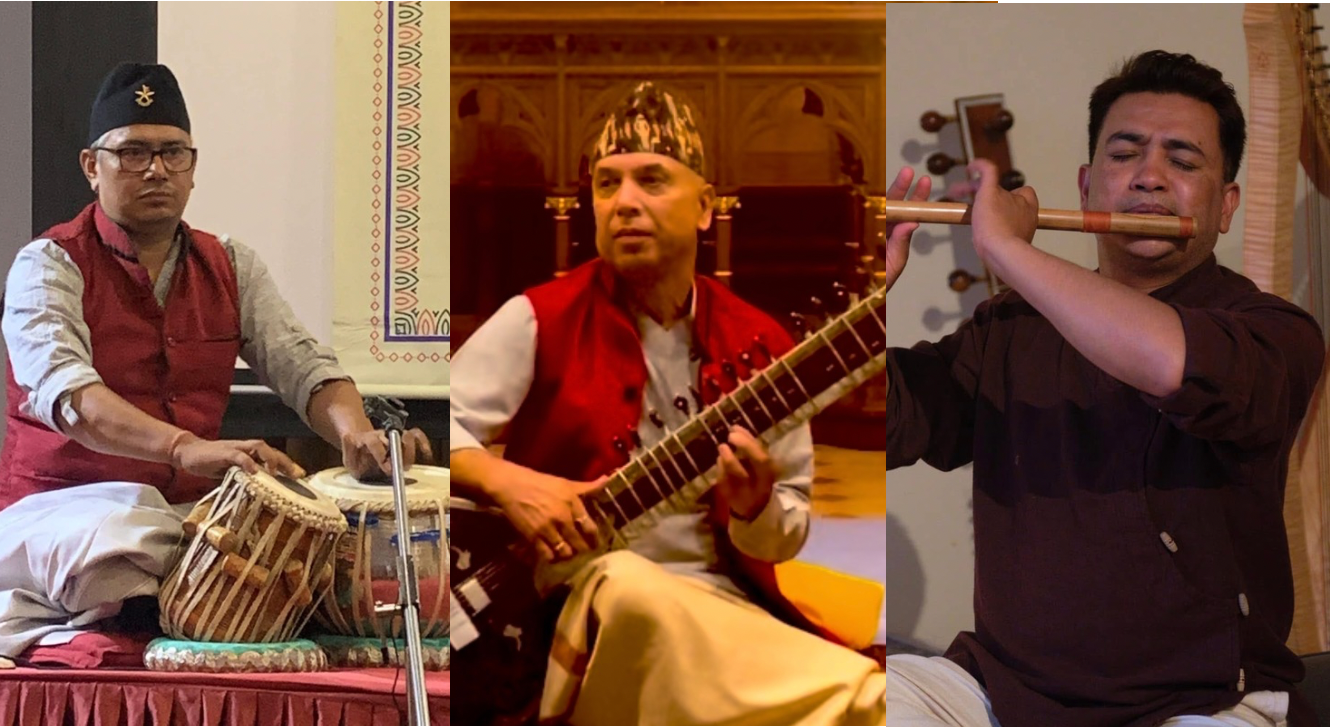
    Leading the ensemble is Prof. Dr. Dhrubesh Chandra Regmi, Nepal’s first musician to earn a PhD in Music from the University of Delhi. A fourth-generation sitar maestro, he inherited Nepal’s distinguished sitar tradition pioneered by his great-grandfather Dev C. Regmi and refined his artistry under eminent gurus in Nepal and India.

    Beyond his performances, Dr. Regmi has dedicated over three decades to music education, serving as Professor at Padma Kanya Campus and later as Head of the Central Department of Fine Arts at Tribhuvan University (2021–2025). A Fulbright Visiting Scholar in New York, author of influential books on Nepali music history, and recipient of numerous national honours, he has become one of Nepal’s foremost cultural scholars and ambassadors.

    Joining him are accomplished musicians Umesh Pandit, an award-winning flautist and murchunga player celebrated for his collaborations with Grammy-winning artists, and Ananta Prajapati, one of Nepal’s leading tabla and percussion virtuosos with performances spanning Nepal, India, Malaysia and China.

    Together, they present an extraordinary combination of Sitar, Tabla, Madal, Flute and Murchunga, each instrument representing different dimensions of Nepal’s musical identity—from the meditative resonance of the sitar to the earthy rhythms of the madal and the distinctive metallic voice of the Himalayan murchunga.

    Music as a Language of Peace

    Sukarma’s philosophy extends beyond artistic excellence.

    Every performance seeks to communicate themes of peace, harmony, environmental awareness, cultural diversity, community rights and coexistence. Their repertoire reflects Nepal’s majestic landscapes, multicultural society and centuries-old musical traditions while embracing dialogue with global musical forms.

    Their performances are not merely concerts but cultural conversations—demonstrating how tradition and innovation can coexist beautifully.

    A Remarkable Global Journey

    Sukarma has represented Nepal in dozens of international festivals and concert tours since 2002.

    The ensemble has performed extensively throughout Italy, Switzerland, Germany, France, Belgium, Austria, the Netherlands, Luxembourg, Denmark, the United Kingdom, the United States, China, Japan, South Korea, Hong Kong, Pakistan, India and Kyrgyzstan, appearing at internationally recognized festivals, universities, museums, cultural institutions and concert halls.

    Recent tours include:

    • Europe Tour (2025)
    • China Tour (2025)
    • USA Tour (2024)
    • Europe Tours (2024 & 2023)
    • Multiple concert tours across Europe and North America from 2002 onward

    Through every international appearance, Sukarma has consistently projected Nepal’s cultural identity on the global stage.

    Europe Tour 2026

    This August, Sukarma returns to Europe with performances across Italy, Switzerland and Germany, presenting Nepali folk-classical music before international audiences.

    Tentative Schedule (2–25 August 2026)

    • 2 August – Departure from Kathmandu to Milan, Italy.
    • 3 August – Public performance at the Valseriana Music Festival near Milan.
    • 4–6 August – Private workshops and studio sessions in Milan.
    • 8 August – Public concert at CaBaRe Club, Zürich.
    • 9 August – Public performance at Church Zürich Altstetten.
    • 11–14 August – Cultural visits and private engagements in Frankfurt and Dresden, Germany.
    • 15 August – Public concert at Bullingerhaus, Zürich.
    • 16 August – Public performance at Church Hausen am Albis, Canton of Zürich.
    • 19–23 August – Performances at the Avellino Music Festival near Naples, Italy.
    • 24 August – Departure from Milan.
    • 25 August – Arrival in Kathmandu.

    Nepal’s Musical Identity on the World Stage

    In an era where cultural identity often competes with globalization, Sukarma demonstrates that tradition need not remain confined within museums or archives. Instead, it can travel across continents, inspire new audiences and build bridges among cultures.

    Every note performed by Sukarma carries echoes of Nepal’s mountains, rivers, villages and ancient traditions. Every concert becomes an invitation to experience Nepal—not only through its breathtaking landscapes but through the language of melody.

    As Sukarma begins another European journey this August, it once again reminds the world that Nepal’s greatest treasures are not only carved in stone or written in history, but also resonate through strings, rhythms and breath.

    For nearly thirty years, Sukarma has proven that while borders may separate nations, music remains humanity’s most universal language. Through its unwavering commitment to artistic excellence and cultural diplomacy, the ensemble continues to redefine Nepali folk and classical music for audiences around the globe, ensuring that the sound of Nepal is heard far beyond the Himalayas.

  • Kathmandu Beautifies Koteshwor Corridor with Murals and Flower Planters

    Kathmandu Beautifies Koteshwor Corridor with Murals and Flower Planters

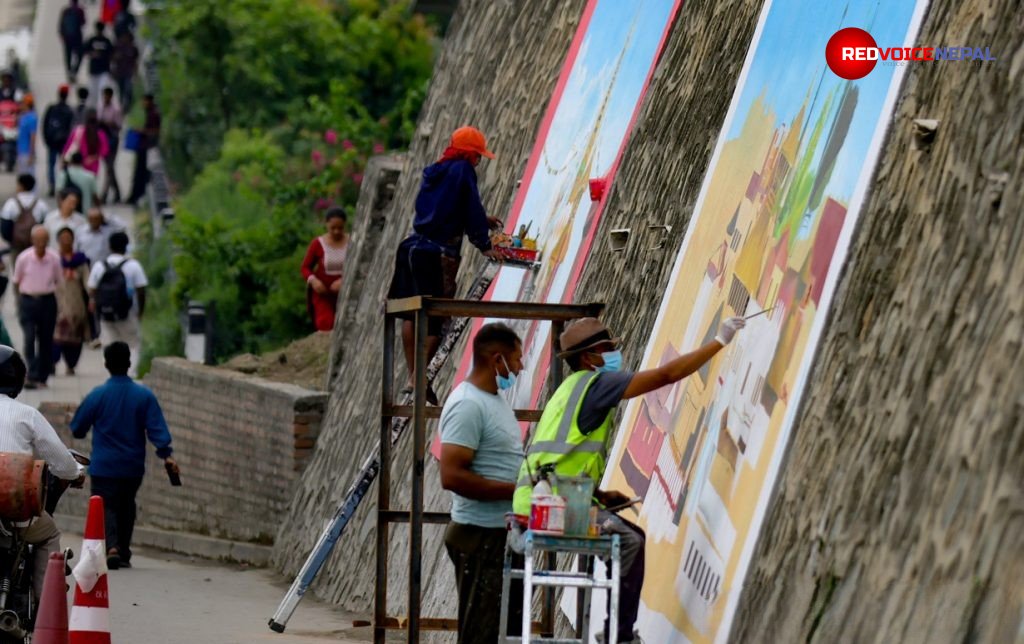
    Kathmandu: The Kathmandu Metropolitan City has intensified its roadside beautification campaign, transforming the Koteshwor corridor with colorful murals and flower filled planters as part of its drive to create a greener and more attractive capital.

    The beautification work includes painting artistic murals on roadside walls and installing decorative flower planters along the road.

    The project is being implemented by the metropolitan’s Parks and Greenery Promotion Project under its flagship programme, “My Aspiration, a Beautiful and Green City.”

    According to the metropolitan office, the initiative aims to improve the city’s visual appeal while promoting a cleaner, greener, and more pleasant urban environment for residents and visitors alike.

    The murals showcase illustrations of Kathmandu Valley’s historic heritage sites, celebrating the capital’s rich cultural and architectural legacy while adding vibrant public art to the streetscape.

    In the first phase of the campaign, the metropolitan completed roadside beautification works, including the installation of decorative flower planters, in front of Singha Durbar.

    The Koteshwor project marks the next step in the city’s broader effort to enhance public spaces and urban aesthetics.

  • Ranjana Script a Carrier of Nepal’s National Identity on the Global Stage: Spokesperson Manandhar

    Ranjana Script a Carrier of Nepal’s National Identity on the Global Stage: Spokesperson Manandhar

    Kathmandu: Kathmandu Metropolitan City Ward No. 17 has launched a 20 day Ranjana script writing training program for local residents, aiming to promote and preserve Nepal’s indigenous linguistic and cultural heritage.

    The training began on May 26, is being conducted at Shanti Shiksha Mandir Secondary School in Thahiti. Around 30 participants attend the classes daily from 5:30 p.m.

    Ward Chairperson and Kathmandu Metropolitan City spokesperson Nabin Manandhar has been regularly attending the sessions to encourage participants and take part in the learning activities himself.

    “Nepal Bhasa is the official working language of our province, and the Ranjana script is a unique symbol of Nepal’s identity recognized internationally,” Manandhar said.

    “We initiated this training to promote the working language and preserve our original script. Ranjana is not merely a script; it is also a form of calligraphic art. People who learn it often develop better handwriting.”

    Highlighting the diverse participation in the training, he noted that children as young as seven and individuals up to 60 years old are learning together in the same classroom.

    “There have been no difficulties in teaching participants of different age groups. We realized that we simply had not made such efforts before.

    Through cooperation with local residents, we aim to create records in our indigenous script and contribute to the preservation and promotion of our language and writing system,” he said.

    Manandhar also emphasized the historical significance of Nepal Lipi and Nepal Sambat, describing them as indigenous identities developed in Nepal.

    “When Nepal sought international recognition as a distinct state, the Ranjana script developed in Nepal was presented as the country’s own script. This training will play an important role in preserving such historical legacies,” he added.

    The training covers Nepal Lipi, Ranjana script, numerals, and calligraphy skills.

    According to chief trainer Anil Sthapit, president of Nepal Lipi Guthi, Nepal Bhasa and Ranjana script contain 13 vowels, including six primary vowel characters and four forms of vowel markers.

    The script also has 41 consonants, five more than the 36 consonants found in Devanagari.

    “Nepal Bhasa is largely composed of short vowel sounds, and even words borrowed from Sanskrit have gradually been adapted into native forms,” Sthapit explained.

    The earliest script found in Nepal is believed to be the Brahmi script inscribed on the Ashoka Pillar in Lumbini. Nepal Lipi is thought to have originated in Nepal during the 9th century.

    One of the earliest known manuscripts written in Nepal Bhasa, Lankavatara, related to medical knowledge, dates back to the early 10th century (Nepal Sambat 28).

    The 13th century is regarded as a major period of development for the script, during which manuscripts covering religion, architecture, literature, rituals, astrology, culture, medicine and urban planning were produced. Since these works were handwritten, they existed in limited numbers.

    Sthapit said that approximately 15,000 such manuscripts are preserved at the National Archives while around 20,000 are housed at Asha Saphu Kuthi, a community established archive dedicated to preserving traditional scripts.

    With the advent of digital technology, Nepal Lipi and Ranjana script were incorporated into Unicode in 2016, making them more accessible for digital use.

    Today, language translation tools and modern technology have also made the study and learning of these scripts easier for a wider audience.

  • Art Program Highlights Climate Change Risks for Persons with Disabilities

    Art Program Highlights Climate Change Risks for Persons with Disabilities

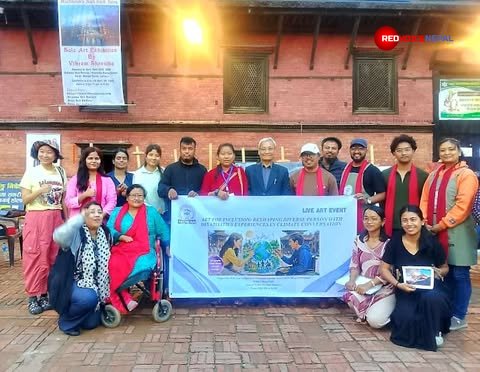
    Kathmandu: The Nepal Indigenous Disabled Women Association (NIDWAN) organized an awareness program focusing on the impact of climate change on persons with disabilities in Kathmandu.

    The event was held at Patan Durbar Square, where more than a dozen artists participated in a live art session. Through their paintings, they illustrated how climate change disproportionately affects people with different types of disabilities, particularly Indigenous women.

    Senior artist and former Vice-Chancellor of the Nepal Academy of Fine Arts, K.K. Karmacharya, stated that although climate change impacts everyone, persons with disabilities face greater risks during disasters such as floods and landslides. He emphasized the need for inclusive support systems and timely awareness to reduce risks.

    Speaking at the event, Dipak Gyawali noted that climate change is already affecting agricultural production, including crops like millet, maize, and rice. He stressed the importance of increasing public awareness and preparedness.

    NIDWAN President and Associate Professor at Tribhuvan University, Pratima Gurung, said the program aimed to raise awareness among Indigenous persons with disabilities and help them better understand and prepare for climate-related risks.

    She added that art can be a powerful medium to communicate complex issues and create deeper understanding. Artists participating in the event shared that the program provided a platform to exchange ideas and express the challenges faced by vulnerable communities.

    Their artworks portrayed rising temperatures, melting glaciers, floods, landslides and the impact on human and animal life. The program concluded with a strong message on the importance of environmental protection, inclusivity and preparedness, emphasizing that the Earth is a shared home for all living beings.

  • 13th-Century Buddha Idol Reinstalled at Original Monastery on Buddha Jayanti

    13th-Century Buddha Idol Reinstalled at Original Monastery on Buddha Jayanti

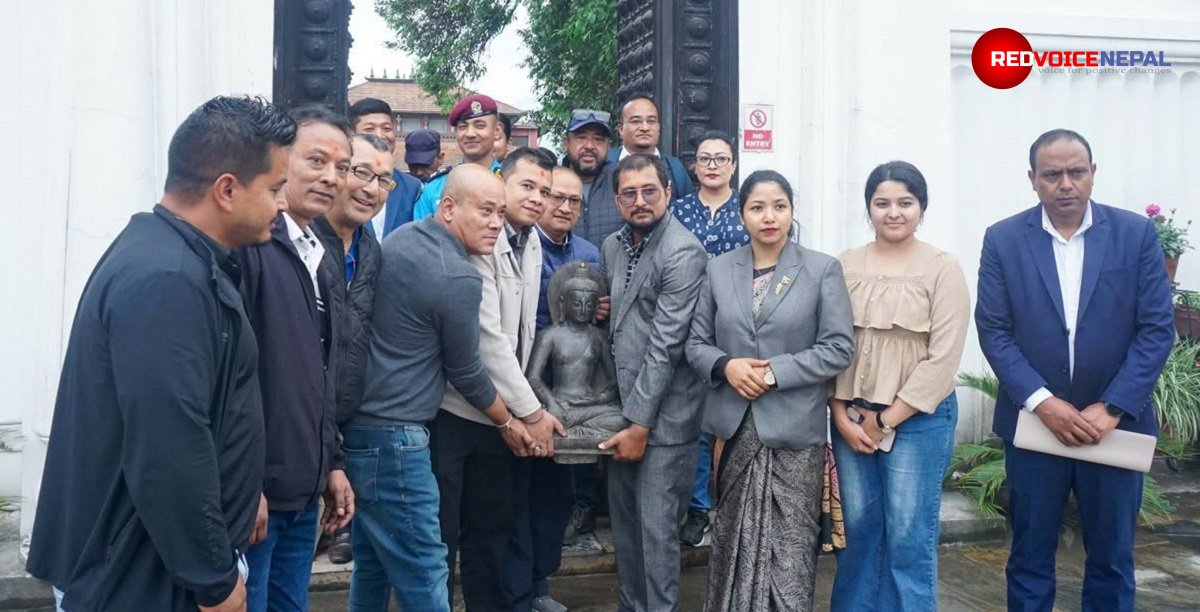
    Kathmandu: A centuries old idol of Gautam Buddha has been reinstated at its original site in Nhuchhe Baha after nearly five decades.

    The historic statue, dating back to the 13th century had been stolen in the 1980s from the monastery located in Jorganesh Ombahal Tole, Ward-13 of Kathmandu. It was repatriated to Nepal on March 2, 2022 from the Tibet House Collection in New York, United States and had since been preserved at the Department of Archaeology.

    The idol was ceremoniously reinstalled on May 1, marking the 2570th Buddha Jayanti. The event was attended by Acting Mayor Sunita Dangol, Ward Chair Macharaja Maharjan, heritage conservation activists and local Guthi members. The ceremony featured traditional music and community participation.

    Speaking at the event, Dangol emphasized that heritage idols of Nepal Mandal carry deep cultural and social significance, urging communities to remain vigilant in preserving such artifacts.

    National Museum Chief Aruna Nakarmi, along with conservationists Ganapatilal Shrestha and Sanjay Adhikari, highlighted ongoing efforts to recover and safeguard stolen heritage items as a positive step forward.

    In recent years, other significant artifacts have also been repatriated and restored. These include the Toran of Kumari Ghar, reinstalled in November 2025 and a 13th century idol of Mahagauri (Parbati) from Suryamukhi Mahadev Temple which was returned from the United Kingdom and reinstalled in April 2026.

    Kathmandu Metropolitan City has played a key role in facilitating the legal and administrative processes required for the recovery of these stolen cultural treasures.

  • Editor Dahal Honored with Yadusmriti Journalism Award

    Editor Dahal Honored with Yadusmriti Journalism Award

    KATHMANDU: Editor of Nepali Newsline and Nepal Television program producer, Dhanbir Dahal, has been awarded the Yadusmriti Journalism Award for the year 2082 BS.

    The 24th edition of the award was presented at a special ceremony held in Kathmandu on Wednesday. The award was handed over by CPN-UML Vice Chairman and former Finance Minister Bishnu Paudel, who honored Dahal with a certificate and a cash prize of Rs. 25,000.

    According to the Yadusmriti Foundation, Dahal was recognized for his significant contribution to journalism, particularly for using his writing to stand against murder, violence, terrorism and for promoting peace, harmony and prosperity in society.

    Dahal, who has been active in journalism for over two decades, was also injured during the People’s Movement of 2006 (2062–63 BS).

    The Foundation has been annually honoring journalists who advocate for peace and social harmony through their work.

    The award was established in memory of writer, literary figure and political activist Yadu Gautam, who was killed by Maoist cadres during the conflict period. Since then, the foundation has continued to recognize journalists committed to peacebuilding through journalism.

  • Book “Komal Abhibhavakatwa” Gentle Parenting Launched, Emphasis on Positive Parenting

    Book “Komal Abhibhavakatwa” Gentle Parenting Launched, Emphasis on Positive Parenting

    KATHMANDU: A book launch and felicitation program for “Komal Abhibhavakatwa” (Gentle Parenting), written by Mathura Thapa, Chairperson of Hamro Balapan Nepal was held grandly in Kathmandu on Tuesday under the slogan “Parenting Education: A Need of Today.”

    The event witnessed the presence of parents, educators, psychologists and individuals actively engaged in various social sectors.

    The book was officially launched by Chief Guest and Member of the House of Representatives, Dr. Dhananjay Regmi. Speaking at the program, he urged parents to be mindful of children’s mental health, stating that even minor stress can have serious impacts on a child’s mind. He emphasized the importance of nurturing children with love, care and affection.

    “Children are emotionally sensitive and it is the responsibility of parents to create a positive environment for their growth and development,” he said.

    Psychologist Dr. Ganga Pathak highlighted that parental behavior plays a decisive role in children’s emotional development. She stressed that guidance through understanding, empathy and communication is more effective than fear, pressure or harsh discipline.

    Similarly, litterateur Dr. Bidur Chalise expressed confidence that the book would help parents learn appropriate ways of dealing with children, describing it as a useful resource for all parents.

    On the occasion, Nepal Journalists Association Vice President Umid Prasad Bagchand, Press Council Nepal member Shantaram Bidari, Federation of Nepali JournalistsKathmandu President Shobha Aryal and PABSON Lalitpur Chairperson Arjun Maharjan, among others extended their Welcome Speeches, stating that the book would be highly beneficial in shaping responsible and capable parenting.

    Author Mathura Thapa shared that the book is based on her long experience working with children. She noted that it includes practical issues, challenges and solutions observed during her visits across different parts of the country.

    “The book presents ways to treat, engage and teach children helping strengthen the relationship between parents and children,” she said.

    The book covers various aspects of child psychology, the role of parents, emotional development and practical parenting approaches in simple language.

    According to the organizers, such programs aim to raise awareness about parenting education and child rights. Participants noted that the event highlighted the evolving nature of parenting and the importance of sensitivity and positive thinking in children’s mental and emotional development.

    The book is expected to provide practical guidance to parents and contribute to building a child friendly society.

    During the event, several individuals were also honored for their contributions to social service, journalism and education, including child psychologist Dr. Ganga Pathak, RSS journalist Prakash Silwal and social worker and photojournalist Pasangkaji Sherpa.

  • Sindoor Jatra Colors Bhaktapur as Tradition and Community Spirit Come Alive

    Sindoor Jatra Colors Bhaktapur as Tradition and Community Spirit Come Alive

    KATHMANDU: The vibrant Sindoor Jatra in Madhyapur Thimi, Bhaktapur has once again brought streets to life, marking the Nepali New Year with color, tradition and communal harmony.

    Celebrated as a key part of the Bisket Jatra, the festival sees residents carrying more than 30 ceremonial palanquins, locally known as “khats,” through narrow streets towards the central Layeku square. Young participants carry the structures on their shoulders, dancing and running in a display of energy and devotion.

    As the procession progresses, clouds of red and orange vermilion powder fill the air. Participants throw sindoor at each other, turning the entire area into a striking red landscape, a moment that is as immersive as it is symbolic.

    At the heart of the festival is the worship of Balkumari, regarded as the protector deity of Thimi. Local belief holds that the tradition began after special prayers to the goddess helped end a past period of Pandemic and hardship, strengthening faith and establishing the annual celebration.

    While the exact origin of Sindoor Jatra remains unclear, historians trace its roots to Nepal’s Licchavi period or Malla period, highlighting its deep historical significance.

    Sindoor, widely seen in Hindu culture as a symbol of power, auspiciousness and victory, plays a central role in the celebration. Its use reflects both devotion and a collective expression of joy.

    Today, Sindoor Jatra has grown beyond its religious roots to become a symbol of cultural identity. The festival attracts not only local residents but also tourists, drawn by its unique visuals, traditional music and festive atmosphere.

    Beyond the spectacle, the festival continues to reinforce community bonds shared heritage and the message of positivity as Nepal welcomes a new year.

  • Chandani Shrestha Wins “Beautician Talent Nepal 2026” Season 8

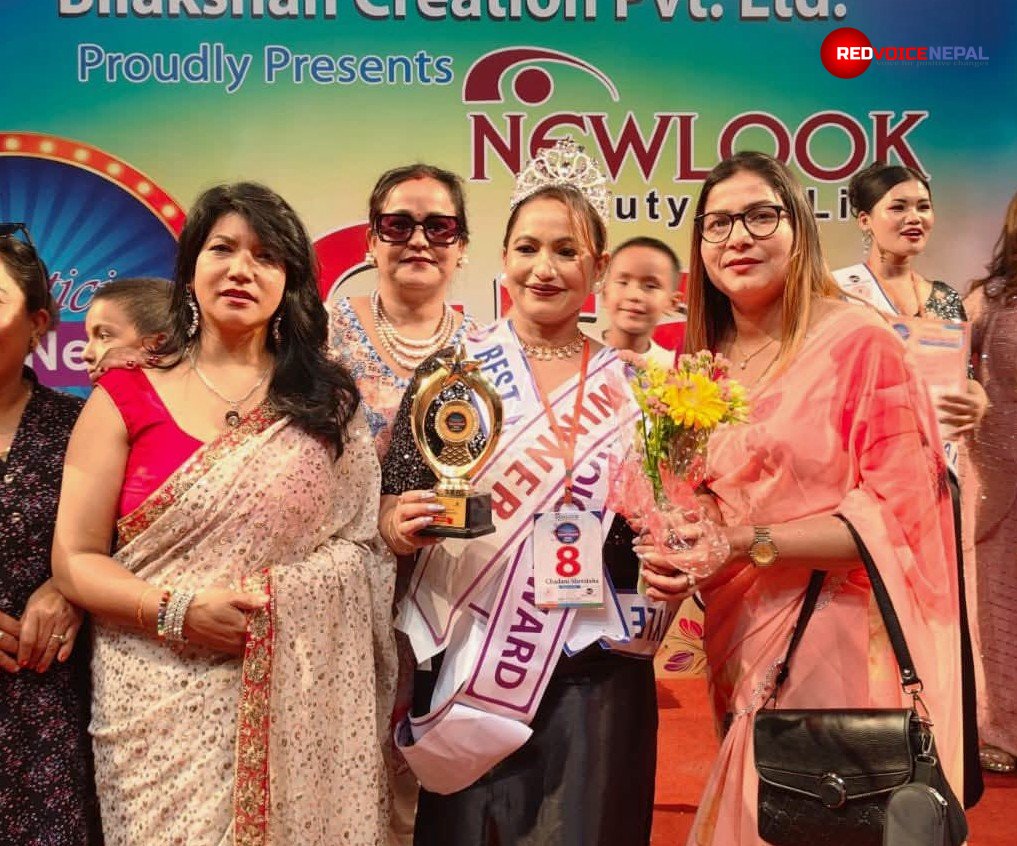
    KATHMANDU: Successful woman entrepreneur and experienced beautician Chandani Shrestha, who participated as contestant number 8 has been declared the winner of Beautician Talent Nepal 2026 Season 8.

    Shrestha, who is also a central member of the All Nepal Beautician Workers’ Association and vice-chair of its Dhading district committee, impressed judges and audiences from the initial rounds with her talent, creativity and professional skills, ultimately securing a place in the grand finale and winning the title.

    Actively engaged in the beauty industry for a long time, Shrestha is also recognized as a successful woman entrepreneur. According to the organizers, her experience in beauty services, innovative approach and dedication to the profession helped her stand out in the competition.

    On the occasion of her victory, a felicitation and congratulatory program was organized by the All Nepal Beautician Workers’ Association at Parisdanda. The event was attended by former Prime Minister Madhav Kumar Nepal, CPN leaders Dev Gurung and Ramdip Acharya as well as senior beautician Ganga Narkmi, among others.

    Speakers at the event described Shrestha’s achievement as an inspiring milestone in the Nepali beautician sector and extended best wishes for her continued success in the future.

    Participants expressed confidence that her achievement would further encourage women’s entrepreneurship and skill based professions in Nepal.

  • Anjali Didi Continues Group Bhaitika: Hundred Receives Tika at Basantapur

    Anjali Didi Continues Group Bhaitika: Hundred Receives Tika at Basantapur

    Kathmandu — Continuing her long-standing tradition, Anjali Didi has once again organized a group Bhaitika ceremony this year, as she has done every year since 2055 BS.

    Describing Bhai Tika as more than just a ritual, she emphasized that it is a festival of love, devotion, and emotional connection between brothers and sisters.

    “Bhai Tika is not only a regular tradition but a celebration of heartfelt bonds,” she said, adding that she has been organizing the group Bhaitika for the past 27 years to ensure no one’s forehead remains without tika.

    The event, held with the same spirit of togetherness, continues to bring smiles to the faces of those who do not have sisters to perform the ritual.

Choose Your Language »