

KATHMANDU: The vibrant Sindoor Jatra in Madhyapur Thimi, Bhaktapur has once again brought streets to life, marking the Nepali New Year with color, tradition and communal harmony.
Celebrated as a key part of the Bisket Jatra, the festival sees residents carrying more than 30 ceremonial palanquins, locally known as “khats,” through narrow streets towards the central Layeku square. Young participants carry the structures on their shoulders, dancing and running in a display of energy and devotion.
As the procession progresses, clouds of red and orange vermilion powder fill the air. Participants throw sindoor at each other, turning the entire area into a striking red landscape, a moment that is as immersive as it is symbolic.
At the heart of the festival is the worship of Balkumari, regarded as the protector deity of Thimi. Local belief holds that the tradition began after special prayers to the goddess helped end a past period of Pandemic and hardship, strengthening faith and establishing the annual celebration.
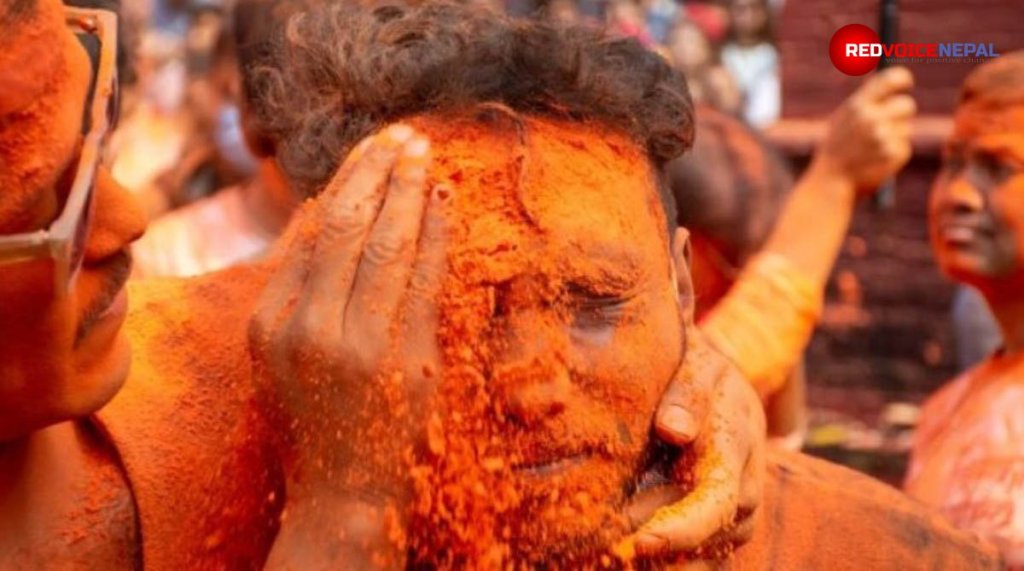
While the exact origin of Sindoor Jatra remains unclear, historians trace its roots to Nepal’s Licchavi period or Malla period, highlighting its deep historical significance.
Sindoor, widely seen in Hindu culture as a symbol of power, auspiciousness and victory, plays a central role in the celebration. Its use reflects both devotion and a collective expression of joy.
Today, Sindoor Jatra has grown beyond its religious roots to become a symbol of cultural identity. The festival attracts not only local residents but also tourists, drawn by its unique visuals, traditional music and festive atmosphere.
Beyond the spectacle, the festival continues to reinforce community bonds shared heritage and the message of positivity as Nepal welcomes a new year.
You must be logged in to post a comment.