
Your body does not store fat evenly and scientists say three things decide where it goes: your genes, your hormones and your age.
Researchers still do not fully understand why fat collects in some places and not others. But they know fat is far more than extra padding. It is a busy, changing part of the body.
What fat does
Fat, also called adipose tissue, is a type of connective tissue that helps hold the body together. For years, scientists thought it was mainly a place to keep spare energy. We now know it does much more.
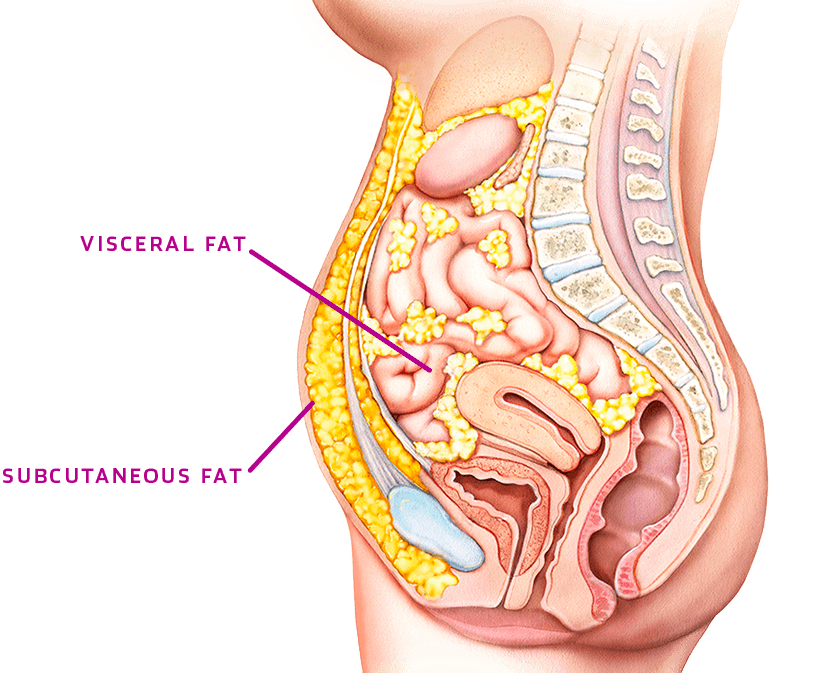
Fat around the organs, called visceral fat, acts like bubble wrap and fills the gaps between them. Fat under the skin, called subcutaneous fat, is the layer you can pinch. It cushions the body and keeps it warm. Fat also makes hormones and reacts to them. These signals help control how the body uses energy and tell you when you are hungry or full.
There are different kinds of fat, too. White fat is the common kind and does the jobs above. Brown fat is rarer. It is full of mitochondria, the parts of cells that make energy, and its job is to make heat when you are cold.
Humans have brown fat, but not every animal does. Babies have a lot of it along the torso because they cannot yet keep themselves warm. Adults have much less. It sits mostly above the collarbone and along large blood vessels such as the aorta. Scientists do not know why it is only in those spots. One idea is that it helps keep the blood and the whole body at a safe temperature.
Why fat lands where it does
For white fat, genes appear to send it to certain areas. Some genes push fat toward the butt, while others push it toward the torso.
Hormones matter too. Estrogen, which is usually higher in females, tends to send fat under the skin of the butt, thighs and backs of the arms. Cortisol, the stress hormone, seems to push fat toward the belly.
There may also be a simple, practical reason fat avoids some areas. Thick fat around the elbows and knees would make it harder to bend them. Too much fat around the head could raise the risk of the brain overheating. Hips, thighs, breasts and buttocks do not have those problems.
Why humans carry so much fat
Big animals are not always fatty ones. A hippo looks round but it has very little body fat compared with a person. Hippos only have around 2% body fat, the percentage of how much of your body mass comes from fat; while the average human woman has over 30% body fat.
In the animal world, large amounts of fat are mostly seen in two groups. Hibernating animals use it as fuel through the winter. A bear can gain hundreds of pounds before it goes to sleep. Sea mammals such as seals and whales use it as a warm coat in cold water.
Humans do neither, yet we carry more fat than other primates and most other mammals. Anthropologists who study human evolution say the answer may be our ancestors’ way of life. Early humans hunted and gathered, and food was not always easy to find. Extra fat may have worked like insurance, giving the body energy until the next meal.
No one knows exactly when this ability began. One clue comes from small stone figures called Gravettian statues. They are 25,000 to 28,000 years old and have been found across Europe and Russia. They show women with a lot of body fat and the fat is shaped the way it is on real bodies today. That suggests the artists knew people who looked like this. Europe was much colder then, which fits the idea that extra fat helped people survive harsh winters.
Researchers say fat is a useful, hard working part of the body and probably a very old one.
With inputs from Agencies.