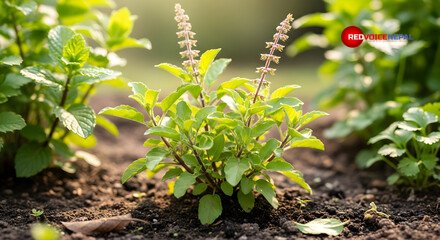
KATHMANDU: Despite being one of the world’s richest countries in terms of valuable medicinal herbs and biodiversity, Nepal has yet to fully harness this potential for economic growth due to limited domestic utilization of its herbal resources.
Experts, traders, and stakeholders in the herbal sector emphasize that exporting herbs in processed and branded forms rather than as raw materials could significantly boost the country’s economic prosperity.
They point out that with proper utilization of available resources, Nepal can establish large scale Ayurvedic hospitals and pharmaceutical industries within the country. Although a wide range of medicinal plants and herbs are found across different regions, most are exported at low prices in raw form while finished herbal products are imported at higher costs.
According to the Department of Plant Resources, Nepal has identified 819 species of medicinal herbs with 33 prioritized for economic development. Around 120 species are currently under cultivation and more than 200 species have the potential for essential oil production.
However, Nepal’s share in the global herbal market remains extremely low around 0.006 percent. Data from the Trade and Export Promotion Centre shows that herbal exports reached Rs 2.04 billion in the last fiscal year, with an average annual export of Rs 1.24 billion.
Officials state that nearly 90 percent of exported herbs leave the country in raw form, resulting in minimal value addition. Director General Sanjeev Kumar Rai highlighted the need for stronger infrastructure, adoption of modern technology, increased research, and enhanced collaboration between private and community sectors to transform the herbal industry into a key driver of economic growth.
“Processing herbs domestically and producing medicines within Nepal can create a strong foundation for prosperity,” he said, adding that advancing research, identifying chemical compositions, and securing patents could improve Nepal’s competitiveness in the international market.
Herbs Production and Processing Company Limited has been producing items such as palmarosa, lemongrass, citronella, mentha, and chamomile-based products. Popular items like Sancho, Himalayan Massage Oil, and Shilajit Paste are already available in the market. However, high production costs remain a major challenge for scaling up output.
Meanwhile, the Federation of Community Forestry Users Nepal has raised concerns about legal complexities that hinder the production and transportation of herbs. Its Chairperson Thakur Prasad Bhandari stressed that subsidies, facilitation and better market management could unlock the sector’s immense economic potential.
Herbal expert Nabin Joshi also underscored that proper processing and branding can significantly increase income, making it easier to achieve higher returns.
Similarly, Kamlesh Kumar Agrawal, President of the Nepal Chamber of Commerce said the herbal sector could serve as a strong base for industrial production and exports ultimately contributing to national prosperity.
You must be logged in to post a comment.