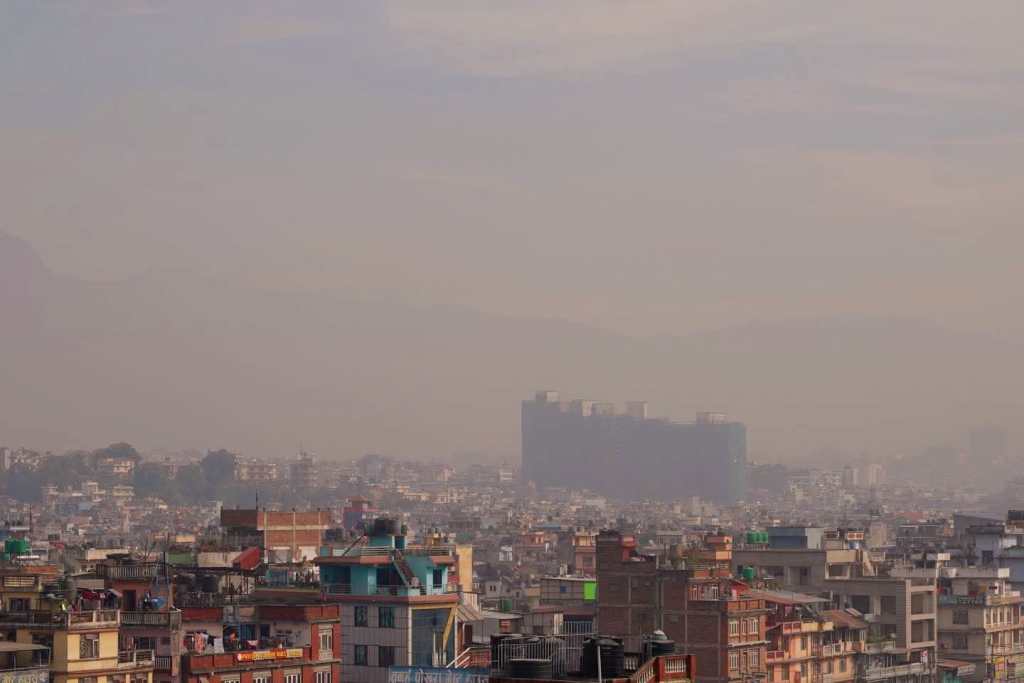
KATHMANDU: Air pollution levels in the Kathmandu Valley are rising sharply with the onset of winter, prompting fresh health concerns among residents.
Meteorologists and environmental experts report that declining rainfall and reduced wind speeds during this season are trapping dust, smoke, and other pollutants within the valley. As a result, harmful particles linger in the atmosphere longer than usual.
Local activities are further exacerbating pollution levels. The burning of crop residue for agricultural purposes, increasing vehicle emissions, dust from roadways, and industrial discharge have all contributed to making Kathmandu one of the world’s most polluted cities during winter months.
A visible layer of smog hanging over the valley clearly noticeable from surrounding hills underscores the seriousness of the air quality crisis.
Authorities have advised residents to remain cautious, especially children, elderly individuals, and those with respiratory issues, as air quality continues to deteriorate. Health officials recommend wearing masks, reducing outdoor exposure, and taking preventive health measures.
Environmental experts emphasize that sustainable urban planning, stricter emission regulations, and improved waste management are essential to combat the valley’s recurring winter pollution problem.