KATHMANDU: Nepali Communist Party has unveiled an ambitious anti corruption agenda, vowing to institutionalize good governance, transparency and accountability as the foundation of state functioning. Arguing that entrenched policy level corruption, abuse of authority and a culture of impunity have long hindered Nepal’s development, the party said meaningful prosperity would remain unattainable without structural reforms and firm political commitment.
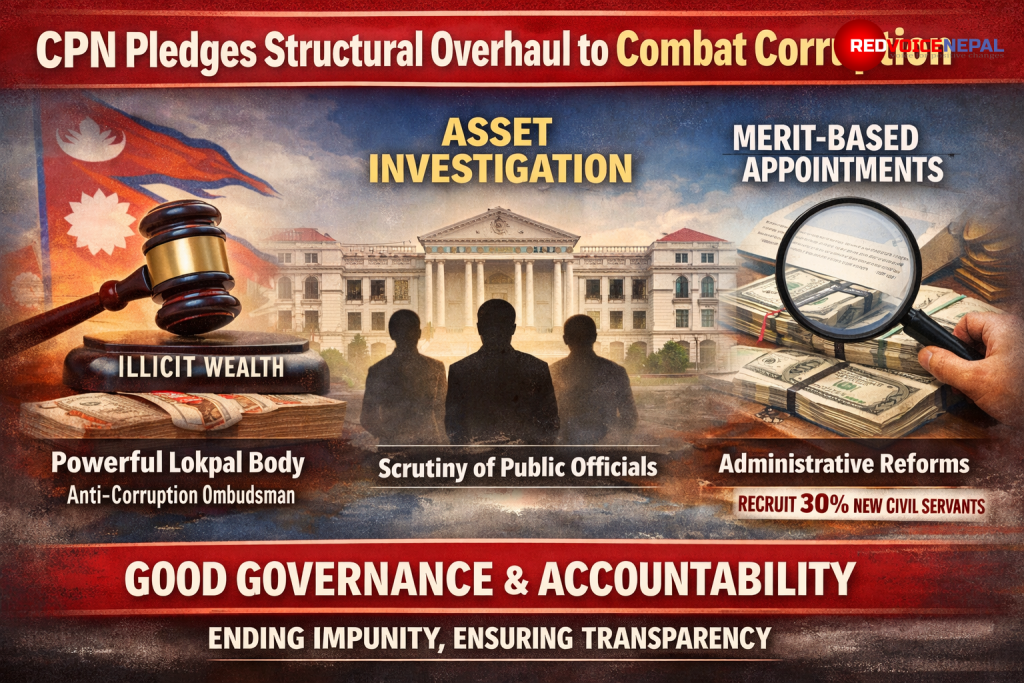
Proposal for a Powerful Ombudsman At the heart of the proposal is the creation of an empowered, high level “Lokpal” or ombudsman body. The party plans to consolidate existing oversight institutions including the Commission for the Investigation of Abuse of Authority, the National Vigilance Centre and the Department of Money Laundering Investigation into a single, independent and authoritative mechanism.
According to the party, the proposed Lokpal would have broad powers to investigate corruption cases, recommend prosecution, confiscate illicit assets and coordinate efforts to trace and repatriate assets hidden abroad. Leaders say the move is intended to eliminate duplication, strengthen coordination and ensure more effective enforcement.
They frame the reform not merely as institutional restructuring but as the beginning of a “new chapter” in governance. Asset Scrutiny of Public Officials The party has also pledged to scrutinise the assets of all individuals who have held public office, past and present. It proposes forming an independent, fully empowered commission with a one year mandate to carry out comprehensive investigations.
Ministers, lawmakers, senior civil servants, constitutional office bearers and heads of public enterprises would fall within the scope of the inquiry. The commission would examine unexplained wealth, policy level corruption and decisions deemed to have caused financial harm to the state.
The party says restoring public trust requires applying the principle that “no one is above the law,” adding that past corruption cases should not be left unresolved. Illicitly acquired assets, it says, would be returned to the state treasury. Administrative Restructuring Within Five Years Beyond legal enforcement, the party argues that corruption control requires structural reform. It has set a target to recruit at least 30% new, competitive and qualified personnel into the civil service within five years.
Plans also include restructuring overlapping institutions and streamlining bureaucratic processes to reduce administrative costs and improve service delivery. Merit Based Appointments The party has criticised political patronage and partisan appointments in constitutional and public bodies, saying such practices have weakened governance. It has pledged to introduce a transparent, merit based appointment system through open competition and independent selection processes.
Leaders say this would help professionalise the state apparatus and insulate it from political interference. Governance as the Basis for Prosperity According to the party, a robust anti corruption drive is essential to creating an investment friendly environment, improving public service delivery and ensuring timely completion of development projects.
Describing anti corruption efforts as a core ideological commitment rather than a campaign promise, the party stated: “Without ending impunity and establishing transparency, prosperity is impossible.” With its comprehensive proposals, the party positions itself as championing systemic reform, framing the initiative as a long term national campaign to transform governance in Nepal.