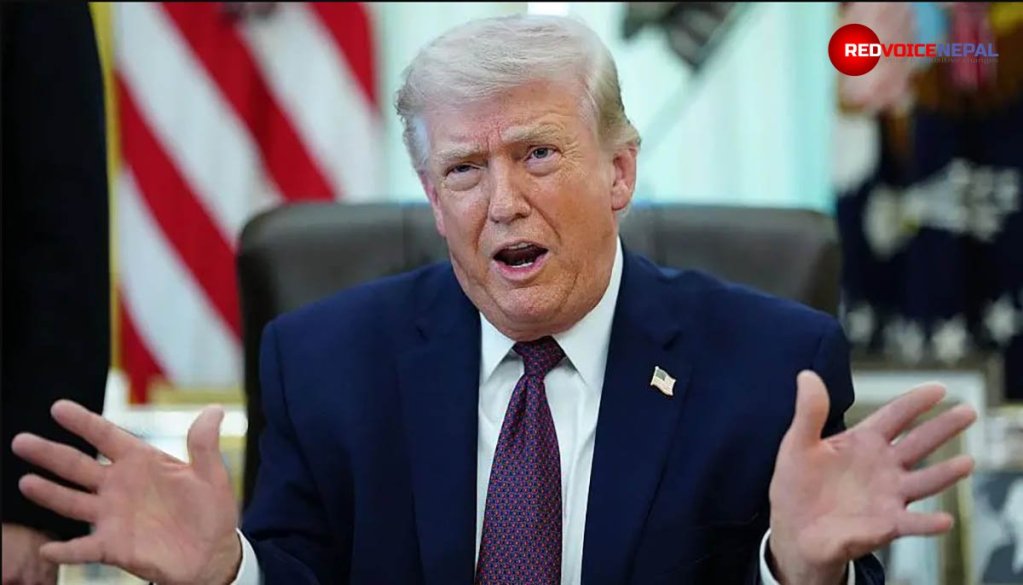
KATHMANDU: The US has proposed fresh tariffs on China, the European Union and 12 other economies, among them Japan, South Korea and Taiwan. The move comes as President Donald Trump keeps pressing his trade agenda, even after the Supreme Court struck down his earlier Liberation Day tariffs.
The White House began investigating other countries’ trade practices in March, after that ruling. China faces the highest rate, up to 40%, followed by Vietnam at up to 35%. Singapore, Switzerland, Indonesia, Malaysia, Cambodia, Thailand, Bangladesh and India face 20% or 25%.
The US Trade Representative published the proposals along with reports on how each economy’s practices allegedly hurt American business. The duties would not start until next year and they must first go through public consultation and possibly hearings. Some rates will be lower in practice because of caps Trump has already agreed with certain countries.
USTR Jamieson Greer said the tariffs would level the playing field for American workers. He accused trading partners of suppressing wages and labor to favor their own manufacturing.
Economists warn that tariffs can push up consumer prices if businesses pass on their costs and that they can slow global trade. Trump says they will boost manufacturing, create jobs and shrink the trade deficit. He is carrying on after a poor midterm result for the Republican party.
The new tariffs rest on firmer legal ground, according to Chang Pao-Li of Singapore Management University. The old ones used emergency presidential powers.
These use the USTR’s authority over foreign trade practices. Lawsuits are still likely, she said but many Section 301 tariffs from Trump’s first term stayed in place under Joe Biden.
Stephen Brown of Capital Economics said the announcement is less alarming than it looks, since the levies mostly replace tariffs announced in the summer and cover a limited range of goods. He expects only a small rise in prices.
Most governments objected. The European Commission rejected the tariffs and pointed out that duties are capped at the 15% already agreed.
Japan called them regrettable. Vietnam said they do not fit the reality of its economic ties with the US.
Singapore disagreed with the findings and said it is talking to the USTR about lowering the rate. South Korea was the exception: its trade minister said the proposed 15% was a decent outcome, in line with an earlier deal that came with a $350bn investment pledge.
Brazil, which faces a separate 10% tariff on aircraft and sugar, said it was outraged and would not give in to threats.
China called the tariffs political manipulation and denied that it produces more than it can consume. Tensions between the two largest economies are likely to rise.
Their trade truce expires on 10 January and last week’s Trump-Xi meeting ended without any announcement on it. Wendy Cutler of the Asia Society Policy Institute said Beijing seems willing to accept rates up to 20%.
With inputs from Agencies.