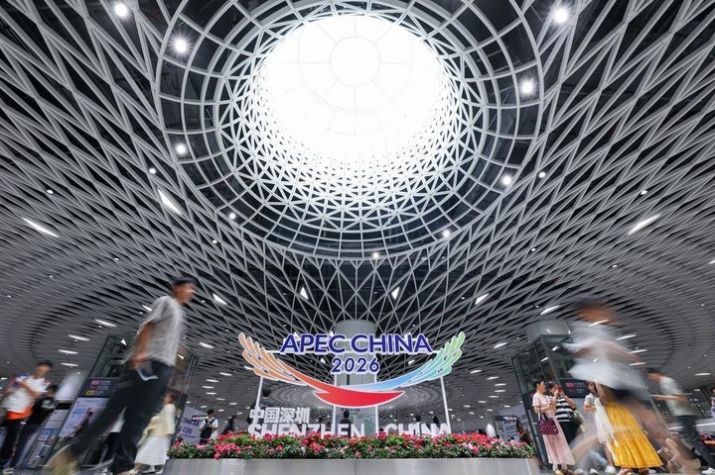
SHENZHEN: China is set to host the 33rd Asia-Pacific Economic Cooperation (APEC) Economic Leaders’ Meeting in Shenzhen from November 18 to 19, marking its first time hosting the regional summit in 12 years.
China last hosted the APEC meeting in Beijing in 2014, where leaders endorsed a vision of an integrated, innovative and interconnected Asia-Pacific region. Since then, China has continued working with other APEC economies to strengthen regional connectivity, trade, technological development and green cooperation.
This year’s summit will be held under the theme “Building an Asia-Pacific Community to Prosper Together,” with openness, innovation and cooperation identified as its three major priorities.
The meeting is expected to provide a platform for regional leaders to strengthen economic partnerships, expand trade opportunities and explore new sources of economic growth amid global uncertainties.
Strengthening regional connectivity and trade
Connectivity has remained a major component of China’s engagement with APEC economies. Shenzhen’s Yantian Port, which operates nearly 100 international shipping routes every week, has 53 routes linking it with other APEC economies.
China has also promoted regional cooperation through infrastructure projects and trade agreements. The Regional Comprehensive Economic Partnership (RCEP), which came into effect in 2022, connects 15 economies, including China, Japan, South Korea, Australia, New Zealand and 10 ASEAN members, creating the world’s largest free trade arrangement by population and economic share.
The China-ASEAN Free Trade Area has also been expanded through the CAFTA 3.0 agreement, signed in October 2025. The upgraded agreement includes new areas of cooperation such as the digital economy, green development and supply chain connectivity.
Infrastructure development has further strengthened regional links. The China-Laos Railway, which connects Kunming in China’s Yunnan Province with Vientiane, the capital of Laos, has transported more than 20.77 million tonnes of import and export goods worth over 100.4 billion yuan since beginning operations in December 2021.
Technology emerging as a new growth driver
Innovation and technological cooperation are expected to feature prominently at this year’s summit.
According to China’s General Administration of Customs, the country’s high-tech exports to other APEC economies increased by 8.1 percent in 2025, reaching 4.63 trillion yuan.
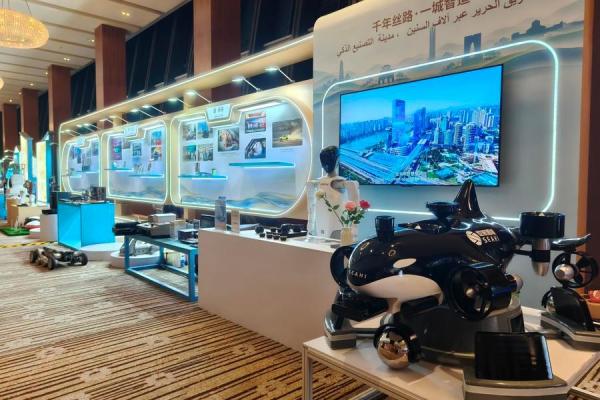
Shenzhen has emerged as a major technology and artificial intelligence hub. By the end of 2025, the city had more than 2,600 large-scale AI enterprises, with core AI industry revenue reaching approximately 220 billion yuan.
Chinese technology companies are also expanding their presence across the Asia-Pacific region. In Malaysia, battery manufacturer EVE Energy has begun operating the second phase of its lithium battery factory, while BYD’s vehicle manufacturing plant in Thailand has an annual production capacity of 150,000 vehicles and employs more than 6,000 people.
Electric vehicles, lithium-ion batteries, solar products, AI-powered goods and medical equipment accounted for 25.6 percent of Shenzhen’s exports to other APEC economies in 2025.
Expanding economic opportunities and shared prosperity
China’s expanding domestic market and investment activities are creating additional opportunities for businesses across the Asia-Pacific region.
In the first half of 2026, Shenzhen’s trade with other APEC economies reached 1.98 trillion yuan, marking a 33 percent increase compared with the same period last year. Investment by Shenzhen-based companies in other APEC economies accounted for nearly 60 percent of the city’s total overseas investment.
The China International Import Expo has also become an important platform for international businesses seeking access to Chinese consumers. Australian dairy producer Bulla, which has participated in the expo annually since 2019, secured a direct-sourcing agreement with Chinese grocery platform Dingdong Fresh during the 2025 edition.
China has also expanded agricultural cooperation with developing economies. In Papua New Guinea, Juncao technology, which uses special grasses to cultivate edible mushrooms, has helped rural communities develop alternative sources of income.
Introduced in the country’s Eastern Highlands Province in 1997, the technology has since been expanded through farmer training and demonstration programmes. By March 2025, Juncao and upland rice technologies had reached 20 districts across 10 provinces, benefiting 3,277 trained participants.
As regional economies face challenges related to protectionism, technological transformation and global economic uncertainty, experts say the APEC summit’s focus on openness, innovation and cooperation could help strengthen economic integration and establish common approaches to future development.