KATHMANDU: The government has formed a high-level commission to investigate the assets of individuals who have held key public offices since the 2006 political change, triggering widespread attention across political and administrative circles.
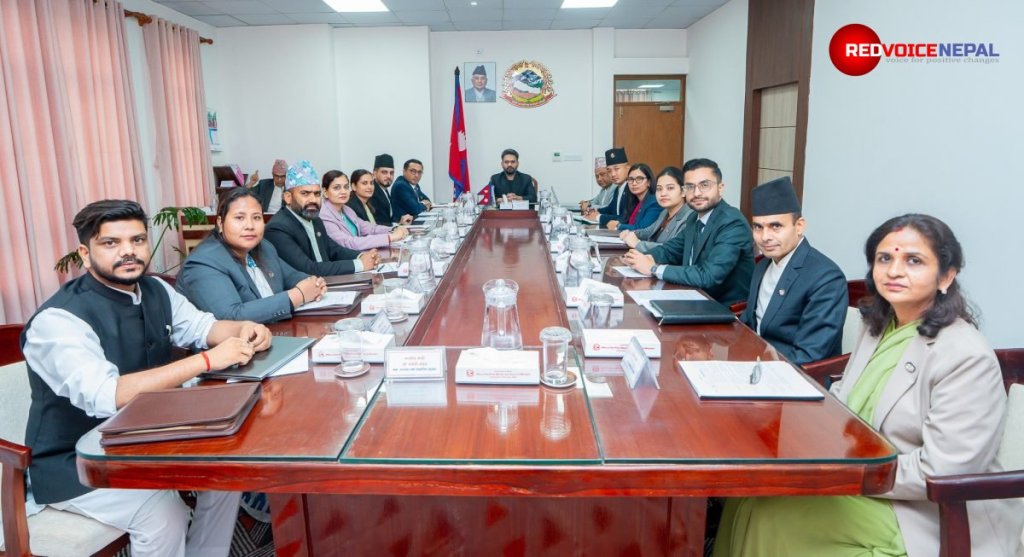
A Cabinet meeting on Wednesday decided to constitute an Assets Investigation Commission under the leadership of former judge Rajendra Bhandari. The commission has been mandated to collect, verify and scrutinize the asset details of top political leaders and senior government officials who have served in public positions from fiscal year 2006/07 to 2025/26. However, its detailed terms of reference are yet to be finalized.
The decision has also raised questions about whether the current Cabinet led by Prime Minister Balen Shah will fall within the scope of the investigation.
Speaking while announcing the Cabinet decisions, government spokesperson and Minister for Communications Sasmit Pokharel Indicated that even current ministers could be subject to scrutiny. Responding to queries over the sources of recently disclosed assets by ministers, Pokharel said the government intends to investigate all individuals who have held major political offices since 2006.
A senior government source also confirmed that both the sitting Prime Minister and incumbent ministers will likely be brought under the commission’s jurisdiction.
Among political figures expected to come under scrutiny is Rabi Lamichhane, chair of the ruling Rastriya Swatantra Party, who briefly served twice as Deputy Prime Minister and Home Minister. Former minister Sumana Shrestha is also likely to be investigated.
The commission will also examine the assets of former prime ministers since 2006, including Sher Bahadur Deuba, KP Sharma Oli, and Pushpa Kamal Dahal, each of whom served multiple terms. Other former premiers such as Madhav Kumar Nepal, Jhala Nath Khanal, Khil Raj Regmi, and Baburam Bhattarai are also expected to fall within the scope.
A key unresolved issue is how the commission will deal with deceased figures. Former prime ministers Girija Prasad Koirala and Sushil Koirala, who have passed away, may still be subject to indirect investigation through their family assets, depending on the commission’s mandate.
There is also uncertainty over whether heads of state will be included. Following the abolition of monarchy after the 2006 movement, Gyanendra Shah was replaced by presidents including Ram Baran Yadav, Bidhya Devi Bhandari, and Ram Chandra Paudel. It remains unclear whether these largely ceremonial roles will be included in the probe.
In addition to political leaders, the commission is expected to investigate senior bureaucrats, though the definition of “high-ranking officials” will be specified in the yet-to-be-drafted mandate. Secretaries are certain to be included, while decisions regarding lower-ranking officials are pending. Ambassadors are also likely to be brought under scrutiny.
The timeline for the commission’s work has not been set. Given the complexity and scale of the investigation, the process is expected to be lengthy. Questions have also been raised about the independence and impartiality of a commission formed by the current government to investigate its own top officials.