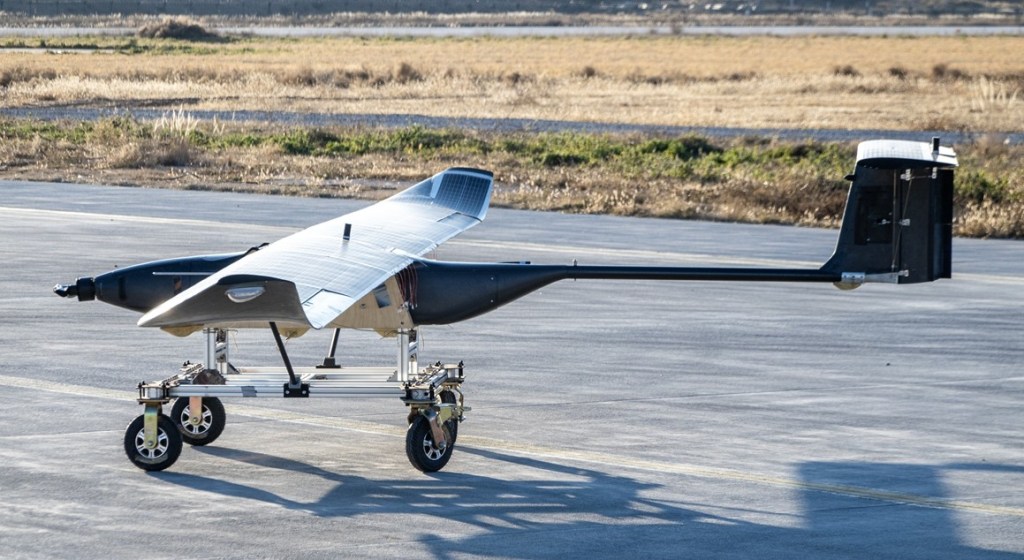
BEIJING: China has successfully completed the maiden flight of a fully solar-powered unmanned aerial vehicle (UAV), marking a significant step towards the commercial use of solar-powered aircraft.
Developed by the 11th Research Institute of China Aerospace Science and Technology Corporation, the UAV, named Light Cavalry, completed its first flight in northwest China, according to the Global Times.
During the test, the aircraft successfully completed takeoff, climbing, circling and landing. Its flight control, avionics and energy storage systems also passed key performance tests, with the aircraft landing safely and all systems operating normally.
The Light Cavalry is designed for long-duration operations using solar energy. It measures 3.2 metres in length, has an eight-metre wingspan and weighs 45 kilograms at maximum takeoff. Its maximum designed endurance is 30 hours, while its service ceiling reaches 7,000 metres. It can carry payloads exceeding five kilograms.
The aircraft can accommodate different commercial equipment, including electro-optical devices, communication systems and detection instruments.
One of its key features is a vehicle-mounted takeoff system that does not require a conventional runway. It can be prepared for flight within 20 minutes, allowing rapid deployment in remote areas, including mountainous regions, coastlines and wilderness.
According to the developer, the UAV is intended to address the limited flight endurance and high operational costs of conventional unmanned aircraft.
Potential applications include infrastructure inspections, water resource monitoring, land surveying, environmental observation, disaster assessment and surveillance of coastlines and ports.
While earlier solar-powered UAV development has largely focused on large aircraft designed for research and high-altitude operations, the Light Cavalry represents an effort to bring smaller and medium-sized solar-powered aircraft into commercial applications.
The successful maiden flight is expected to support further development of long-endurance, low-altitude UAV technology in China.