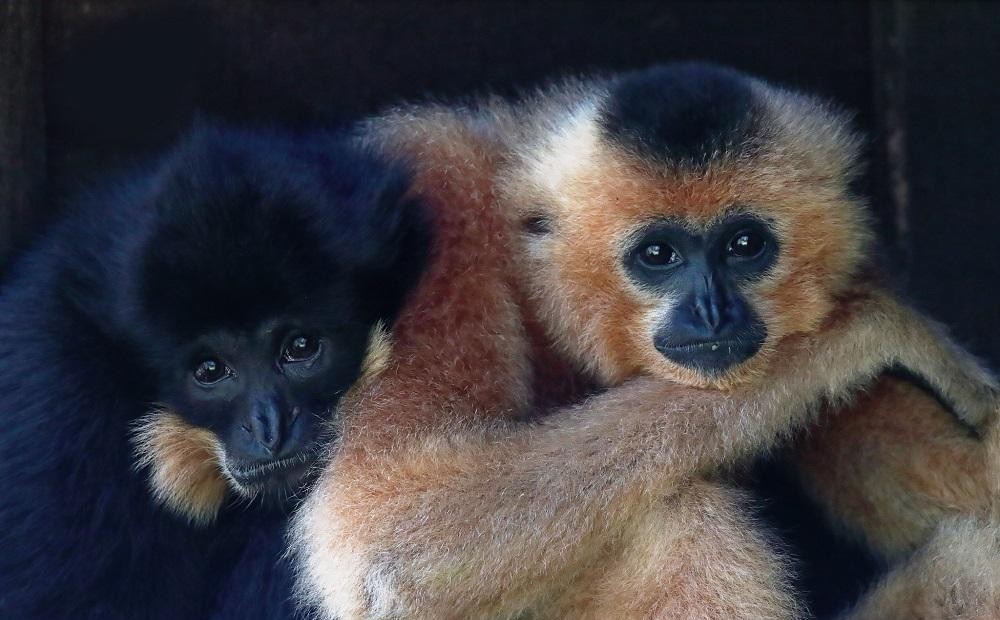
HAIKOU: China’s efforts to protect tropical rainforests and restore wildlife habitats have contributed to a steady recovery of the endangered Hainan gibbon, whose population has increased to 44 across seven groups by the end of 2025.
The Hainan gibbon, native to the tropical rainforests of China’s southern island province of Hainan, is considered one of the world’s rarest primates. Its population had fallen to fewer than 10 individuals living in just two groups in the early 1980s due to commercial logging, deforestation and poaching.
However, sustained conservation measures have helped reverse the decline, making it the only gibbon species globally to have recorded continuous population growth.
Wildlife monitoring teams play a crucial role in these efforts. Researchers and forest monitors begin their work before sunrise, trekking through the dense forests of the Bawangling area to track the animals, observe their movements and monitor their habitat.
China has also strengthened forest protection through institutional reforms. In 2019, Hainan began integrating previously separate nature reserves, forest parks and state-owned forest farms under a unified management system.
The Hainan Tropical Rainforest National Park was subsequently established in 2021 as one of China’s first five national parks. It protects the country’s largest and best-preserved continuous area of island-type tropical rainforest.
Chinese President Xi Jinping has repeatedly highlighted the importance of biodiversity conservation. During his visit to Hainan in April 2022, he toured the rainforest, learned about the gibbons’ habitat and emphasized the need to balance environmental protection with green economic development and improvements in local people’s livelihoods.
International cooperation is also becoming an important part of rainforest conservation. China and Brazil have expanded collaboration on climate change and sustainable development, exploring approaches that protect forests while supporting communities dependent on natural resources.
The issue was also discussed at the 2026 Tropical Rainforest Ecosystem Partners Conference in Hainan, which brought together officials, environmental experts and representatives from more than 20 countries.
Brazilian environmental analyst Greice Quele Aparecida Barboza de Oliveira, who visited Hainan for the conference, said she hoped to learn from China’s wildlife conservation experience and apply relevant practices in Brazil.
Hainan’s tropical rainforest is located within one of the world’s 34 recognized biodiversity hotspots. Beyond providing habitats for rare species, it plays an important role in water conservation, food resources and carbon absorption.
The recovery of the Hainan gibbon demonstrates how long-term conservation, coordinated forest management and international cooperation can contribute to protecting endangered wildlife and preserving vital ecosystems.