NEW DELHI: India’s Union Cabinet has approved an eight-year industrial support programme worth 110 billion rupees ($1.19 billion) to strengthen domestic manufacturing of construction and infrastructure equipment (CIE), reflecting the country’s efforts to expand its industrial capabilities and reduce dependence on imported machinery.
The programme will support the production of construction equipment and key components while establishing a dedicated testing facility for the sector. The initiative is also expected to improve India’s competitiveness in the global construction equipment market.
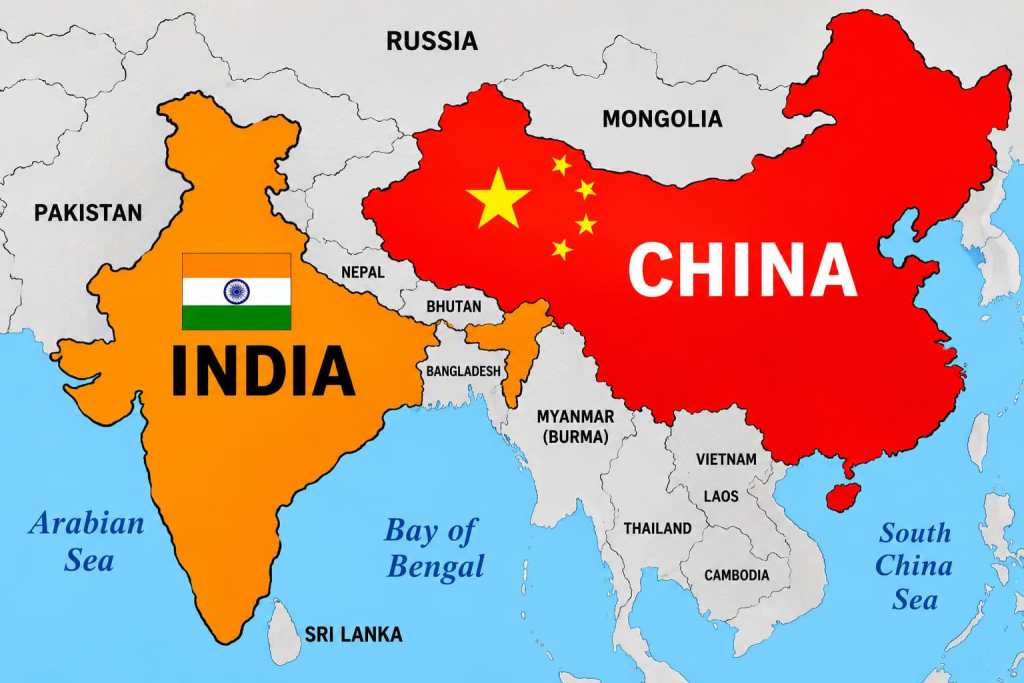
The policy has drawn attention from Indian media outlets, some of which have connected the initiative to concerns about the availability of Chinese machinery. The Economic Times reported that the decision came amid China’s restrictions on exports of certain heavy equipment, including tunnel-boring machines.
Similarly, CNBC TV18 described the programme as part of India’s broader strategy to strengthen domestic manufacturing and reduce reliance on foreign suppliers. It noted that India depends significantly on China for machinery used in infrastructure projects, particularly in mountainous, high-altitude and border regions.
However, India’s ambition to develop its construction equipment industry has economic foundations that extend beyond recent supply-chain concerns. Reports indicate that the government and industry representatives had discussed financial incentives for domestic manufacturing for nearly two years before the programme received approval.
India’s expanding infrastructure and urbanisation are creating substantial demand for construction machinery. The country is currently the world’s third-largest construction and infrastructure equipment market, after China and the United States.
According to Indian government figures, the domestic market was valued at approximately 975 billion rupees ($11 billion) in the 2024-25 fiscal year. It is projected to grow to around 2.28 trillion rupees by 2029-30, supported by investment in roads, railways, ports, housing and other infrastructure projects.
Despite the growth opportunities, industry observers have cautioned against excessive protectionism. Some domestic manufacturers are seeking stronger protection through higher tariffs and stricter local sourcing requirements, raising concerns about increased production and procurement costs.
Manufacturing advanced construction equipment requires sophisticated technology, significant capital investment and an extensive supply chain. Key elements include precision machinery, hydraulic systems, industrial controls and specialised components. Restricting access to international suppliers before domestic industries are sufficiently developed could increase costs and potentially slow infrastructure development.
China’s experience in building its construction equipment industry offers a possible model for India. During the 1980s, Chinese manufacturers actively acquired foreign technologies and expanded international partnerships while gradually strengthening their own research and development capabilities.
For example, Chinese equipment manufacturer LiuGong introduced technology from US-based Caterpillar in 1987 and established a joint venture with Germany’s ZF Friedrichshafen in 1995. Over time, the company expanded its capabilities across complete machinery, core components and after-sales services.
Chinese manufacturers have since made significant progress in areas such as electrification, intelligent technologies and advanced equipment development.
This experience demonstrates that international cooperation and technological self-reliance can advance together. Access to foreign technology and industrial resources can help domestic companies strengthen their research capabilities, improve production efficiency and accelerate technological development.
As the global construction equipment sector moves towards greener and smarter technologies, cooperation between China and India could create opportunities in machinery production, component supply and research and development.
For India, the challenge will be to transform its growing domestic market into a sustainable manufacturing advantage. Reducing imports alone may not guarantee industrial success. The country’s long-term competitiveness will depend on its ability to develop advanced technologies, strengthen domestic supply chains and produce equipment capable of competing internationally.
Ultimately, industrial self-reliance does not necessarily require isolation from global markets. A combination of domestic innovation, international partnerships and open competition could provide a more sustainable foundation for India’s construction equipment ambitions.