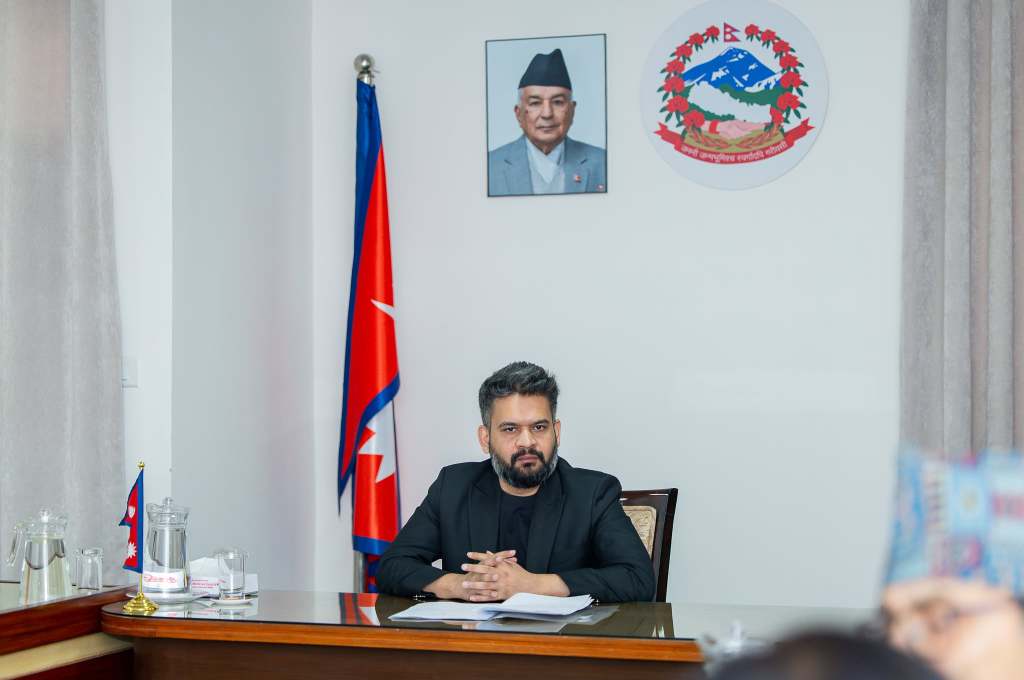
KATHMANDU: The Balen Shah led government is facing growing criticism over a series of recent public appointments, with concerns that women and other marginalized communities are being overlooked despite Nepal’s constitutional commitment to inclusive representation.
The latest appointments, including Maheshwar Bhakta Shrestha as Chairperson and Managing Director of Nepal Airlines, Umesh Shrestha as Chairperson of the Press Council Nepal, and Arjun Ghimire as Chairperson of the Nepal Telecommunications Authority, have reignited debate over the government’s appointment policy.
Critics argue that while the government has promoted merit-based recruitment through open competition, the process has resulted in overwhelmingly male-dominated appointments.
The trend is particularly evident in higher education. All seven recently appointed vice-chancellors of public universities are men, despite women applying for several of the positions. Ministry data shows that only 13 of the 227 applicants were women, and although six reached the final shortlist, none secured an appointment.
A similar pattern has emerged in the health sector. Of six newly appointed vice-chancellors of health science institutions, only Prof. Dr. Smriti Karki was appointed, while the remaining five positions went to men.
Men have also been appointed to several other influential public posts, including the Tribhuvan University Service Commission, Nepal Securities Board, Medical Education Commission, National Sports Council, and Gorkhapatra Corporation.
Academics and rights advocates say the government’s interpretation of meritocracy fails to account for structural barriers that limit women’s participation. Professor Sanjeev Upreti argues that capable women exist but are often overlooked because the state does not actively seek or encourage them.
Advocate Indu Tuladhar has also questioned whether the current selection process adequately measures merit, warning that it risks undermining the constitutional principle of inclusive representation.
Nepal’s Constitution guarantees proportional and inclusive participation of women, Dalits, Indigenous peoples, Madhesis, Tharus, Muslims, persons with disabilities, and other marginalized communities in state institutions. However, critics say recent appointments have fallen short of those constitutional commitments.
The government has defended its approach, saying appointments are being made through open competition and transparent selection procedures based primarily on merit.
Government spokesperson and Minister for Education and Sports Sasmita Pokhrel said expert committees evaluated candidates before making recommendations, adding that while inclusion remains important, merit has been the primary basis for appointments.


You must be logged in to post a comment.