Tag: nepali politics

  • Probe Committee Records Statement of Sudhan Gurung, Investigation Nears Completion

    Probe Committee Records Statement of Sudhan Gurung, Investigation Nears Completion

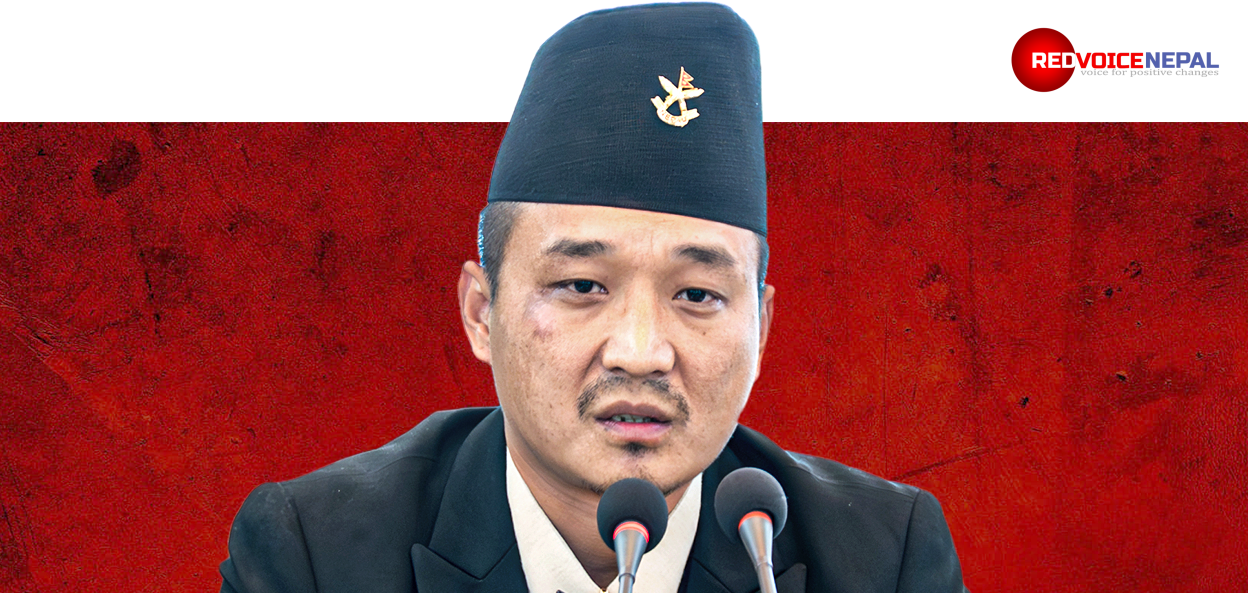
    Kathmandu: The committee formed to investigate former Home Minister Sudhan Gurung has recorded his statement as the probe enters its final stage.

    According to committee sources, Gurung was questioned over two days — Tuesday and Wednesday. The committee said he could be summoned again if necessary.

    “We have already recorded his statement. There remains a possibility of calling him again if needed,” a source said.

    Before taking Gurung’s statement, the committee had reportedly examined allegations against him, reviewed his property details, and gathered information from concerned parties.

    The Cabinet meeting on May 11 had formed the probe panel under former High Court judge Achyut Prasad Bhandari. The committee also includes Comptroller General Shobhakanta Poudel and Deputy Attorney General Achyutmani Neupane as members.

    With Gurung’s statement now recorded, the investigation has reached its final phase, according to committee sources. The panel is currently preparing its report and is expected to submit it to the government within the next few days.

    The committee has been working under a 15-day deadline, prompting an accelerated push to finalize the report.

    Earlier, committee coordinator Bhandari had said the report would clearly determine whether Gurung was guilty or innocent based on evidence.

    Allegations Against Gurung

    Businessman Dipak Bhatt was arrested in Kathmandu on April 1 on money laundering charges and remains in police custody. Gurung came under scrutiny after reports emerged linking him as Bhatt’s business partner.

    Questions were also raised over Gurung allegedly concealing shares in his property declaration and holding investments in companies associated with controversial businessmen. Amid mounting public criticism, Gurung resigned from his post on April 22.

    In his resignation statement posted on social media, Gurung said he took public concerns seriously and supported an impartial investigation into the matter.

    The government formed the investigation committee on May 14, nearly 20 days after his resignation. Since then, the Home Ministry has remained under the direct supervision of the Prime Minister.

    Political discussions have also surfaced suggesting Gurung could return as Home Minister if the committee clears him of wrongdoing

  • Opposition Demands PM Shah’s Presence in Parliament Question Hour

    Opposition Demands PM Shah’s Presence in Parliament Question Hour

    Kathmandu: During a meeting of the House Business Advisory Committee, the ruling Rastriya Swatantra Party (RSP) pledged to facilitate Prime Minister Balendra Shah’s participation in the parliamentary question-and-answer session.

    The assurance came after opposition parties strongly insisted that the Prime Minister must attend the question hour in accordance with provisions outlined in the House Rules. RSP Chief Whip Kabindra Burlakoti said efforts would be made to ensure the Prime Minister appears in Parliament soon.

    Under parliamentary rules, the Prime Minister is required to hold a direct question-and-answer session with lawmakers during the first week of a parliamentary session.

    Opposition parties have been obstructing House proceedings over the issue, warning that Tuesday’s session would also face disruption if the Prime Minister failed to attend.

    Chief Whip Yubaraj Dulal of the Nepali Communist Party said the opposition remains firm on enforcing the mandatory provision for the Prime Minister’s question hour and has demanded a fixed date for his appearance in Parliament.

    “We have clearly stated that the Prime Minister must participate as required by the rules. Otherwise, the session should be postponed to create an environment for his participation,” Dulal said.

    He added that opposition parties also want the upcoming national budget presentation on Jestha 15 to proceed peacefully without disruption.

    According to Dulal, although the RSP chief whip committed to bringing the Prime Minister to Parliament, no specific date has been confirmed.

  • Govt Announces 3 Month Rent Support for Displaced Families

    Govt Announces 3 Month Rent Support for Displaced Families

    Kathmandu: The government has decided to provide financial assistance to families displaced from risk-prone settlements in a bid to encourage them to arrange alternative housing on their own.

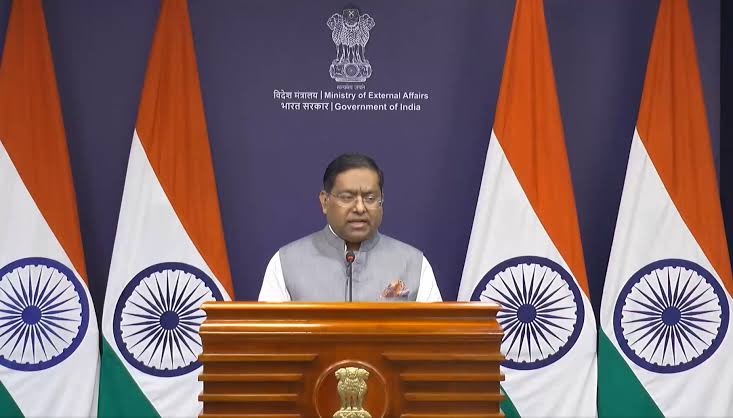
    A Cabinet meeting held on Tuesday approved monthly relief support for affected families for up to three months, government spokesperson Sasmit Pokharel said.

    According to the decision, families with up to five members will receive Rs 15,000 per month for temporary housing expenses for three months.

    Likewise, families with more than five members will receive an additional Rs 2,000 per month for each extra member during the same period.

    The government stated that the support aims to encourage displaced residents of vulnerable settlements to independently manage alternative living arrangements while immediate rehabilitation measures are carried out.

  • Mixed Reactions to Government’s Policy and Programme: Hope, Challenges and the Test of Implementation

    Mixed Reactions to Government’s Policy and Programme: Hope, Challenges and the Test of Implementation

    Kathmandu: The government’s policy and programme for the fiscal year 2083/84 has triggered wide political and economic debate with many viewing it as an indication of the administration’s future direction amid expectations of good governance, alternative leadership and a new political approach.

    Presented in Parliament by President Ram Chandra Poudel, the 100 point policy document prioritizes information technology, green economy, energy, agriculture, tourism, startups and small enterprises. It also outlines goals including graduation to a middle income country, investment friendly policies, improved public service delivery and strengthened governance.

    The document has drawn mixed reactions since its unveiling. Opposition parties have described it as a continuation of traditional policies, while ruling coalition leaders have defended it as a foundation for gradual reforms and economic improvement.

    Senior opposition leader and lawmaker Arjun Narsingh KC criticised the programme, saying many of the commitments have been repeatedly included in previous government plans without producing meaningful change.

    Economist Dilli Raj Khanal said the programme contains some positive indicators but lacks a clear roadmap for long term structural transformation. He noted that Nepal’s sluggish economy, declining private sector confidence, rising unemployment and inflation require more concrete and targeted measures.

    The government, however, maintains that the programme is aimed at economic reform, greater private sector participation and the creation of new opportunities in the energy sector. According to economist KP Pandey, policies allowing greater private sector involvement in electricity trade, flexibility in transmission line policies and efforts to improve the investment climate could prove significant if implemented effectively.

    Measures related to tax reform, control of under invoicing and relief for the middle class have also been viewed positively by some experts, who believe they could help stimulate the economy if executed properly.

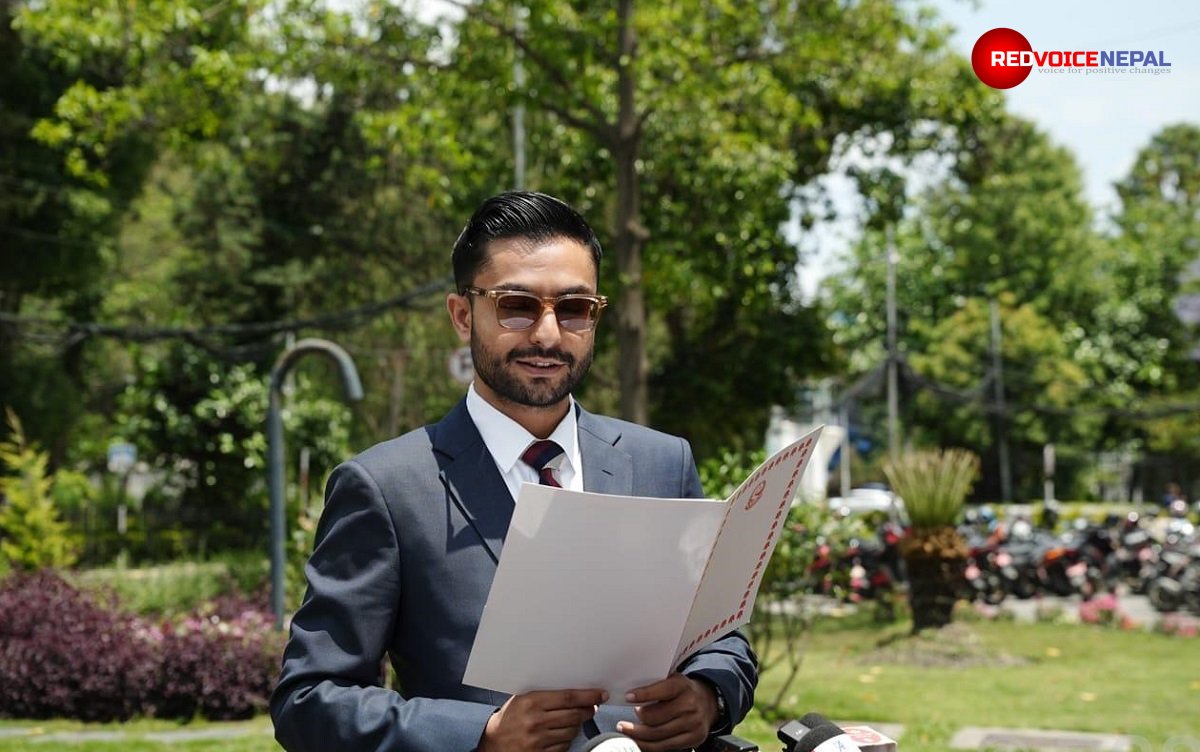
    A separate political discussion emerged after Prime Minister Balen Shah briefly left Parliament while the President was reading the policy document. Opposition leaders criticised the move, while government supporters described it as a routine administrative matter.

    Analysts say the public is now more focused on results than promises, amid growing frustration over unemployment, inflation, migration and weak public service delivery.

    Economist Kusum Shakya said the success of the policy and programme will ultimately depend on implementation, noting that Nepal has long struggled not with policy formulation but with execution.

    Despite the mixed reactions, observers say the policy and programme has highlighted both opportunities for reform and the challenges ahead. The government’s biggest test, they say, will be its ability to translate commitments into visible results for the public.

  • Parliament Built on the Blood of Thousands of Martyrs: Prachanda

    Parliament Built on the Blood of Thousands of Martyrs: Prachanda

    Kathmandu: Pushpa Kamal Dahal Prachanda coordinator of the Nepal Communist Party and former prime minister said the present Parliament was built on the sacrifices of thousands of martyrs from across the country.

    Addressing the House of Representatives on Monday Dahal said the Parliament building may appear to be made of cement, bricks and iron from the outside but its foundation is rooted in the sacrifices of countless martyrs.

    “This rainbow Parliament, representing every class, caste, gender and community is the result of struggle and sacrifice. We once took up arms and launched movements for this inclusive representation,” he said.

    Becoming emotional during his speech Dahal added that every wall of the Parliament carried the legacy of sacrifice and struggle.

    He paid tribute to martyrs, disappeared persons, injured fighters and campaigners involved in armed movements, peaceful protests and recent youth led movements.

    Dahal also congratulated Rastriya Swatantra Party for its electoral success saying the party had secured an “almost two thirds majority” in the election.

    “I extend special congratulations to party president Rabi Lamichhane and Prime Minister Balen Shah for this achievement,” he said.

    The leader elected from Rukum East also thanked voters and the Nepali people for their support.

    Congratulating all newly elected lawmakers, Dahal said public representatives carried the responsibility of protecting the achievements gained through sacrifice and struggle.

    He warned that forgetting the sacrifices behind the political transformation could weaken the very institution of Parliament itself.

    “The day we forget those great sacrifices, this building itself will collapse,” Dahal said.

  • Federal Government Pushing Poor Citizens Toward Displacement: Acharya

    Federal Government Pushing Poor Citizens Toward Displacement: Acharya

    Bardiya: Chet Narayan Acharya, Chief Minister of Lumbini Province, has expressed serious concern that the federal government’s current approach is creating conditions that could displace poor and vulnerable citizens.

    Speaking at an interaction programme held in Madhuwan Municipality on Tuesday with representatives of various organisations and political parties, Acharya accused the federal government of using its parliamentary majority against marginalised citizens. He warned that such tendencies would ultimately benefit no one.

    “From now itself, everyone must think seriously and act responsibly. At the very least, people should be able to distinguish who is right and who is wrong before moving forward,” he said.

    Acharya stated that efforts were previously underway to resolve the problems of landless squatters, with some already receiving land ownership certificates while others were in the process of obtaining them. However, he claimed those initiatives had now been halted under the pretext of “not proceeding.”

    He further said political parties had earlier warned about the possibility of such a situation emerging in the country, adding that the government had weakened democratic movements instead of addressing people’s concerns.

    The chief minister alleged that the first target of the government’s actions had been landless squatters and unmanaged settlers. Rather than seriously resolving issues related to unplanned settlements, he said, the state had begun pushing people toward homelessness.

    Acharya also urged the federal government not to act arbitrarily and called for greater sensitivity in addressing the problems faced by landless people, squatters and unmanaged settlers.

  • President Paudel Meets Speaker Aryal After PM Shah Walks Out of Parliament

    President Paudel Meets Speaker Aryal After PM Shah Walks Out of Parliament

    Kathmandu: President Ram Chandra Poudel on Tuesday summoned Speaker Dol Prasad Aryal to Shital Niwas following controversy surrounding Prime Minister Balen Shah walking out of Parliament during the presentation of the government’s policy and programme.

    According to the President’s Secretariat, the two leaders discussed recent political developments during the meeting held at the presidential residence.

    However, the Speaker’s Secretariat has not disclosed details of the discussion publicly.

    The controversy erupted after Prime Minister Shah left the joint session of the Federal Parliament on Monday while President Paudel was still presenting the government’s policy and programme for the upcoming fiscal year 2026/27.

    The incident triggered criticism from opposition parties and political analysts, who described the move as inappropriate and against parliamentary norms.

    Speaker Aryal has also faced criticism, with some lawmakers accusing him of failing to maintain parliamentary decorum and discipline during the House session.

  • Supreme Court Issues Interim Order Against Ban on Student Unions

    Supreme Court Issues Interim Order Against Ban on Student Unions

    Kathmandu: The Supreme Court has issued a short term interim order directing the government not to implement its decision to remove student unions from universities for the time being.

    The order was issued on Monday by a single bench of Justice Shreekant Paudel. The court has also summoned both parties for further discussion before deciding whether to grant an interim order.

    The government had introduced an ordinance to remove student unions from universities and dissolve the Free Student Union FSU.

    Challenging the decision, leaders from various student organisations including ANNFSU chairperson Deepak Dhami, filed a writ petition at the Supreme Court on April 25, demanding the annulment of the government’s decision.

    The Office of the Prime Minister and Council of Ministers has been named as the defendant in the case.

    During the hearing, the Supreme Court also issued a show cause order, asking the government to explain why the order sought by the petitioners should not be granted.

  • Government Launches Nationwide ‘Cleanliness Week’ From Monday

    Government Launches Nationwide ‘Cleanliness Week’ From Monday

    Kathmandu: The government has announced a nationwide ‘Cleanliness Week 2083’ campaign from Baisakh 28 to Jestha 1 aimed at promoting clean, dignified and environment friendly public service delivery across the country.

    The Office of the Prime Minister and Council of Ministers has issued a special directive instructing all federal ministries, provincial offices and local governments to actively participate in the campaign.

    The nationwide initiative will officially begin at 8:30 am on Baisakh 28 from Bir Hospital in the presence of Health and Population Minister Nisha Meheta.

    According to the government issued “Cleanliness Week Operation Guidelines 2083,” the campaign aims to implement sanitation standards in government offices with maximum efficiency at minimal cost.

    The guidelines were introduced amid concerns that the lack of proper sanitation and waste management standards has negatively affected service delivery as well as the health of employees and service seekers.

    Under the campaign, government information boards, citizen charters and signboards must be kept clear and well managed. Cracked and damaged walls will be repaired and repainted, while entrances and main service areas will be maintained in a clean and attractive condition.

    The guidelines also require all toilets to remain odor free with a regular water supply. Soap has been made mandatory at handwashing stations and offices must maintain daily cleaning records.

    Toilets are expected to be women friendly, equipped with sanitary disposal facilities and made accessible for persons with disabilities wherever possible.

    Government offices will also be required to place at least two types of dustbins to separate biodegradable and non biodegradable waste.

    The proper management of unused materials has been emphasized, while open burning of waste has been strictly prohibited.

    In addition, offices must ensure cleanliness within a 100 meter radius of their premises, including drains and sewage systems. The campaign also calls for improved parking management and the removal of unmanaged wires and posters.

    To improve public service experience, offices will establish help desks and fully operate information systems to ensure visitors feel respected and well informed.

    For sustainability, each office must designate a “cleanliness focal person,” prepare weekly sanitation schedules and conduct monthly self evaluations.

    The government has assigned the responsibility of implementation and monitoring to the heads of respective institutions, who will also be required to maintain regular records of sanitation activities.

    The campaign will cover all federal, provincial and local government offices as well as public educational institutions across the country.

  • Locals Block Hulaki Highway Protesting Closure of Bariyarpatti Customs Office

    Locals Block Hulaki Highway Protesting Closure of Bariyarpatti Customs Office

    Janakpurdham: Locals and traders have blocked the Hulaki Highway in protest against the closure of the small customs office at Bariyarpatti in Siraha district.

    The protest intensified after the Government of Nepal published a notice in the Nepal Gazette on May 4 announcing the closure of the Siraha Bariyarpatti Small Customs Office.

    Local residents and traders obstructed the highway by placing benches in the middle of the road at Bariyarpatti Chowk in Bariyarpatti Rural Municipality-3. The protest was joined by the market management committee, Sanjay Kumar Yadav, members of the Sukhipur Chamber of Commerce and other locals.

    Demonstrators have been staging daily protests demanding the reopening of the customs office. Vehicular movement along the Hulaki Highway has been disrupted due to the road blockade.

    Locals say the closure of the customs office will directly affect cross-border trade, revenue collection and daily economic activities in the border area. They have urged the government to reverse its decision.

Choose Your Language »